

The Art of Co-Writing: Tips for Collaboration
Discover the magic of co-writing music. Learn how to navigate collaboration, understand writing roles, protect your art, and politely decline a bad fit.
There’s an unspoken magic when a group of songwriters gather, a kind of lightning in a bottle where blank pages become shared stories and melodies. For those serious about songwriting, co-writing isn’t just a social event—it’s vital training for your creative instincts and professional growth. Great songs rarely appear in isolation. Collaborating lets you push past your own limits, sharpen your ideas, and tap into creative energy you’d never reach alone. In a world bustling with competition, co-writing is how songwriters refine their voice, build lasting relationships, and create music that stands out.
Nashville is the heartbeat of collaborative songwriting—a true haven for lyricists, composers, and creative minds. Here, co-writing is more than ritual; it’s where hard-earned craft meets spontaneous brilliance, and songwriters gather to spark each other’s greatest work. The city’s tradition of blending voices, perspectives, and genres is why so many iconic songs are born here. Whether swapping stories in a cramped writer’s room or chasing melodies over cheap coffee, songwriters thrive in Nashville’s unique mix of camaraderie, friendly competition, and creative cross-pollination. If you’re serious about growing as a songwriter, you’ll find no greater classroom—or stage—than in this city’s dynamic songwriting community.
Whether you’re an established songwriter, a rising artist, or simply eager to collaborate, grasping the dynamics of a professional writing room is transformative. Knowing your role—whether lyricist, composer, or producer—makes each session more effective. Protect your credits and royalties by registering with organizations like ASCAP, BMI, or SOCAN, and always clarify splits upfront. If a session isn’t working, exit gracefully—your creative energy is precious. Keep writing solo to strengthen your unique voice, but don’t shy away from collaboration; every co-write holds the potential for breakthrough. Immersing yourself in the songwriting community ensures growth, opportunity, and songs that truly stand out.
The Alchemy of Shared Roles
A killer co-write doesn’t happen by accident—it’s about songwriters bringing their sharpest strengths to the table. The best sessions thrive when everyone knows their lane, whether it’s crafting hooks, spinning narratives, shaping melodies, or building beats. Mastering your own skills, then intentionally teaming up with people who fill your creative gaps, is essential for growth. This isn’t just practical—it’s the beating heart of Nashville’s scene, where collaborators turn individual sparks into something that truly soars. If you want longevity as a songwriter, know what you do best, seek out those who challenge and complement you, and jump into sessions where the unexpected can blossom.
The Power of Complementary Strengths
One of the most beautiful aspects of co-writing is how different strengths can come together to create something extraordinary. A strong lyricist, who can weave words into vivid stories, pairs perfectly with a melody writer who can craft unforgettable hooks. Each person brings their unique expertise to the table, filling in the gaps where the other might struggle.
Think of it like building a house: the lyricist lays the foundation with a solid narrative, while the melody writer constructs the walls and roof that make it soar. When you embrace these complementary roles, the song becomes greater than the sum of its parts. The key is to recognize and celebrate each other’s strengths, allowing the collaboration to flourish without ego or competition.
Track Writers and Beat Makers
In modern songwriting, track writers and beat makers are the architects of atmosphere. Rather than bringing lyric sheets, they arrive with tools to create grooves, textures, and hooks that shape the very soul of a song. The beat maker’s foundation influences every melody and emotion that follows, laying vibrant groundwork for lyricists and composers to build upon. For songwriters, teaming up with a skilled track writer isn't just trendy—it's essential for pushing boundaries and crafting songs with dynamic energy and depth.
A great track writer crafts the groove, the chord progressions, and the underlying instrumental hooks that make a song physically move. They establish the emotional temperature of the room before a single word is ever sung. When you collaborate with a gifted beat maker, their instrumental bed often pulls melodies out of you that you never knew you possessed.
Lyricists and Composers
Lyricists and vocal composers are the storytellers behind every unforgettable song. The lyricist crafts imagery, emotion, and meaning into every word, often obsessing over rhyme, meter, and story arc to ensure that each lyric resonates beyond just the page. Their sensitivity to word choice and phrasing transforms fleeting ideas into memorable hooks and timeless verses. Working alongside composers—who intuitively map melodies and invent vocal lines that lift those lyrics—songwriters together shape works that are as singable as they are moving. At its heart, songwriting is about collaboration: fusing unique talents to create songs that linger long after the last chord fades.
The composer, meanwhile, focuses on the vocal melody. They figure out how the words will rhythmically dance over the beat maker's instrumental track. In many Nashville sessions, you will find a dedicated "topliner"—a writer who specializes exclusively in writing the vocal melody and lyrics over a pre-built instrumental track. When the architect and the storyteller unite, the song finally finds its soul.
Protecting Your Masterpiece: ASCAP, BMI, and SOCAN
Before you play a note with a new collaborator—especially as a songwriter aiming to grow—you need to know the business side of your craft. Writing a great song is only half the job; protecting your rights, credits, and future royalties is the rest. Always discuss splits upfront and register your songs with a PRO like ASCAP, BMI, or SOCAN. These organizations not only ensure you get paid but connect you with events and collaborators, making them essential tools for any serious songwriter.
This is where Performance Rights Organizations (PROs) step in. Organizations like ASCAP (American Society of Composers, Authors and Publishers), BMI, and SOCAN (for our Canadian friends) are the guardians of the songwriting community.
When your co-written song is played on the radio, streamed on a digital platform, or performed in a live venue, it generates performance royalties. PROs track these plays and distribute the money to the registered songwriters.
Joining a PRO is non-negotiable for a professional musician. Beyond collecting your royalties, these organizations offer a massive web of networking opportunities. They host workshops, showcases, and writer-in-residence programs that can help you meet incredibly talented new collaborators. Treat your art like a business from day one, and always agree on your writer splits (the percentage of the song each person owns) before you leave the writing room.
The Delicate Art of Bowing Out
Not every co-write will spark magic—sometimes the chemistry just isn’t there, and that’s okay. In Nashville and the wider songwriting world, it’s crucial to recognize when a partnership isn’t working. The most successful songwriters know how to step back with professionalism, valuing their time and creative energy. Take it as a sign to seek new matches who challenge and inspire you, and remember: politely bowing out preserves future opportunities and keeps your reputation strong.
Navigating a mismatched writing session requires a high level of professional diplomacy. The music industry is a shockingly small town, and you never want to burn a bridge just because a Tuesday morning session felt clunky.
If you find yourself trapped in a recurring write that you no longer wish to pursue, you must learn to decline gracefully. You do not need to invent elaborate excuses. Keep your response polite, brief, and incredibly professional.
You might say, "I really appreciate you thinking of me, but I am taking a step back from collaborations right now to focus intensely on my solo project." Alternatively, you can say, "I loved exploring that idea with you, but I feel our sonic visions are moving in different directions for this specific project. I am cheering you on from the sidelines!"
If you are currently in the room and the session is painfully unraveling, do not force a terrible song into existence. Suggest wrapping up early. "I feel like I am hitting a creative wall today, and I do not want to force this concept. Let's put a pin in this and step away." Grace and honesty will protect your reputation every single time.
Why the Solitary Pen Still Matters
Amid the energy of co-writing, solo songwriting remains a songwriter’s secret weapon. Writing alone hones your authentic voice, pushes you out of creative ruts, and helps you discover ideas you can only find in solitude. Solo sessions let you experiment boldly and refine your craft—skills vital for thriving in a community like Nashville’s, where individuality elevates every collaboration. The strongest songwriters invest in their own artistry between sessions, bringing fresh sparks and depth to every new co-write.
Solo writing gives you the opportunity to develop your authentic artistic voice, try out unconventional melodies and lyrics, and refine your craft without compromise. This focused creative time is especially important for songwriters in Nashville who want to impress music producers and recording studio professionals with a strongly individual style. By spending regular time dedicated to songwriting on your own, you’ll bring more originality and versatility to every future session, making you stand out when searching for a Nashville producer or the right studio to record your music.
When you write by yourself, you do not have to compromise. You can chase bizarre melodies, explore hyper-specific lyrical concepts, and completely fail without anyone watching. Solo writing forces you to flex your own creative muscles without leaning on a stronger collaborator to rescue a weak chorus.
Furthermore, you must intimately know your own creative voice before you can confidently bring it into a shared space. The strongest co-writers are the ones who possess a fiercely defined individual style. They know exactly who they are, which allows them to bend and mold their ideas to fit the room without losing their artistic identity. Dedicate at least one day a week to sitting alone with your instrument. Your future co-writers will thank you for it.
Casting a Wider Net: Finding New Collaborators
If you always write with the same people, your songs risk becoming predictable. The key to creative longevity in songwriting is deliberately seeking out new collaborators—people from different genres, backgrounds, and perspectives. By constantly expanding your circle, you inject fresh energy and ideas into your work, discover unique writing styles, and keep your songs relevant in today’s crowded landscape. Diversifying your co-writing partners challenges you to grow, adapt, and bring greater originality to every session; in the songwriting world, variety is not just exciting, it’s essential for true artistic breakthrough.
Do not wait for publishers or managers to set up your writes. Take the initiative. Send a polite, complimentary direct message to an independent artist whose recent release you admired. Attend local open mic nights, writer's rounds, and music conferences. Organizations like the Nashville Songwriters Association International (NSAI) offer incredible resources, chapter meetings, and online forums specifically designed to connect passionate songwriters from all over the globe.
Step entirely out of your comfort zone. If you are a country lyricist, try writing with an electronic music producer. If you make hip-hop, sit down with a folk singer. The most groundbreaking music often happens at the messy intersection of two completely different genres.
Practical Wisdom for the Writing Room
Successful co-writing starts long before the first chord. Set expectations—discuss goals, splits, and creative approach upfront. Arrive with fresh ideas and be ready to both share and listen; vulnerability and respect allow bold risks and breakthroughs. Don’t cling to pet lines or melodies—serve the song, not the ego. Trust is built when everyone feels heard and valued, making room for honest feedback, playful experimentation, and shared wins. The best sessions blend discipline with spontaneity, allowing lightning to strike but giving it a clear path to follow.
Leave your ego at the door: The best idea wins, regardless of who suggested it. Do not cling defensively to a lyric just because you thought of it first. Serve the song, not your pride.
Come prepared: Never walk into a room entirely empty-handed. Bring a list of interesting song titles, a few melodic voice memos, or a cool guitar riff. Providing a starting spark takes the pressure off the room.
Embrace the bad ideas: You have to dig through a lot of dirt to find the gold. Encourage your co-writers to shout out terrible ideas without fear of judgment. A "bad" idea often serves as the necessary stepping stone to the brilliant one.
Discuss the splits early: Decide how you will divide the song's ownership before you leave the session. The standard industry practice is to split the song evenly among everyone in the room, regardless of who contributed the most words. This fosters an environment of total trust.
Bring Your Shared Vision to Life
Co-writing challenges songwriters to embrace empathy, vulnerability, and adaptability—core skills that push boundaries and elevate your craft. Collaborating with fellow creators unlocks fresh ideas, exposes you to new techniques, and builds networks that can open doors. The best songwriters know that great music rarely happens in isolation; partnership, creative risk-taking, and constant learning are the secrets to songs that truly resonate in today’s vibrant community.
After the final lyric is penned and the melody feels just right, your new song deserves a recording space that honors true songwriting—where the artistry, vision, and details are expertly captured. Working with a studio team fluent in the language of songwriters ensures both your co-writes and solo tracks shine, preserving the emotional core and nuance that set great songs apart in a crowded world.
At Studio45b, we specialize in translating songwriters’ raw ideas into captivating, professional recordings. Our team values the craft and heart in every lyric and melody, drawing on deep experience to help you realize your vision—whether you’re co-writing or writing solo. Book a session and let your song reach its full potential in a studio designed for songwriters, by songwriters.
Balancing Genuine Artistry with Commercial Appeal
Learn how to balance genuine artistry with commercial appeal. Discover why top rock and country recording studios use expert producers to brand your sound.
Have you ever written a song that felt like your absolute soul laid bare, only to wonder if anyone will actually play it on the radio? You are not alone. Every musician hits that exact crossroad. You want to make art that matters to you, but you also want to pay your rent doing what you love.
Finding the sweet spot between staying completely true to your creative vision and creating a hit that fans will stream millions of times can feel overwhelming. But here is the secret: art and commerce are not enemies. You do not have to sell out to sell out arenas.
Whether you are strumming an acoustic guitar in a local dive bar or belting out anthems for a global audience, finding your unique footprint is crucial. We are going to explore how you can keep your creative soul completely intact while giving the crowds exactly what they crave. We will also dive into why partnering with a world-class recording studio and a visionary producer is the absolute best way to make your sonic dreams come true.
The Wild Mustang of Creativity
Let us look at your raw talent like a wild mustang roaming the plains. It is beautiful, untamed, and packed with pure energy. If you leave it completely wild, only a few people will ever get close enough to appreciate it. But if you try to put it in a tiny, restrictive cage, it loses its spirit entirely.
Balancing artistry and commercial appeal is all about harnessing that wild mustang. You want to give it direction and purpose without breaking its spirit. You want to guide that raw, emotional energy into a format that listeners can easily digest, tap their boots to, and sing along with in their cars.
In genres like rock, country, and pop-country, authenticity is your main currency. Listeners can smell a fake from a mile away. They want grit, they want truth, and they want real instruments played by real people. But they also want an earworm chorus that gets stuck in their head for days. You can absolutely have both. You can keep the fiddles, the distorted guitars, and the storytelling lyrics, but structure them in a way that catches the attention of major playlists.
The Producer: Your Musical Compass
Imagine the producer as the mad scientist in the sonic laboratory, blending curious concoctions to create the ultimate musical elixir. They’re an alchemist, transforming raw diamonds of inspiration into sparkling records fit for airwaves and honky tonks alike.
A great producer doesn’t just point you north—they help you chart hidden trails few dare to travel. Maybe they’ll suggest layering a thunderstorm behind your chorus for some extra drama or recommend inviting a local pedal steel legend to add a sweeping touch of magic. Sometimes, they’ll know when a lyric needs a dash of humor, or when a banjo breakdown will turn a solid track into a festival favorite.
Outside-the-box producers might set up a live goat in the studio to get the right countryside ambiance (okay, maybe not a real goat—but you get the idea). They are as much visionaries as technicians, creating environments where musical accidents can become career-defining moments. Don't be surprised if your best hook comes from an impromptu kazoo battle or the sound of boots stomping on the studio floor.
In an era where algorithms can churn out cookie-cutter tracks, a truly creative producer helps your sound leap out of the sea of sameness. They filter all your wild ideas into a cohesive identity—branding your music so it’s instantly recognizable after just three notes. Whether it’s guiding you to fuse prairie poetry with arena-rock crunch, or capturing the creak of your favorite barstool at the start of a song, the right producer helps you build a sonic signature as original as your story.
According to industry experts, the role of a music producer involves translating an artist's vision into a marketable, finished track. They suggest tempos, rearrange song structures, and choose the perfect microphone to capture the gravel in your voice or the twang of your telecaster.
When you track at a professional recording studio, the producer acts as an objective mirror. They tell you when a guitar solo is getting too self-indulgent or when a chorus needs a little more pop-country pizzazz. They ensure your artistic integrity remains the star of the show while wrapping it in a package that radio stations and streaming curators simply cannot ignore.
A great producer doesn’t just point you north—they help you chart hidden trails few dare to travel. Maybe they’ll suggest layering a thunderstorm behind your chorus for some extra drama or recommend inviting a local pedal steel legend to add a sweeping touch of magic. Sometimes, they’ll know when a lyric needs a dash of humor, or when a banjo breakdown will turn a solid track into a festival favorite.
Outside-the-box producers might set up a live goat in the studio to get the right countryside ambiance (okay, maybe not a real goat—but you get the idea). They are as much visionaries as technicians, creating environments where musical accidents can become career-defining moments. Don't be surprised if your best hook comes from an impromptu kazoo battle or the sound of boots stomping on the studio floor.
In an era where algorithms can churn out cookie-cutter tracks, a truly creative producer helps your sound leap out of the sea of sameness. They filter all your wild ideas into a cohesive identity—branding your music so it’s instantly recognizable after just three notes. Whether it’s guiding you to fuse prairie poetry with arena-rock crunch, or capturing the creak of your favorite barstool at the start of a song, the right producer helps you build a sonic signature as original as your story.
According to industry experts, the role of a music producer involves translating an artist's vision into a marketable, finished track. They suggest tempos, rearrange song structures, and choose the perfect microphone to capture the gravel in your voice or the twang of your telecaster.
When you track at a professional recording studio, the producer acts as an objective mirror. They tell you when a guitar solo is getting too self-indulgent or when a chorus needs a little more pop-country pizzazz. They ensure your artistic integrity remains the star of the show while wrapping it in a package that radio stations and streaming curators simply cannot ignore.
This is exactly where a truly innovative music producer steps in. They're part creative scientist, part trail guide—full of wild ideas and an expertise for turning sparks into fireworks. A great producer listens to the mosaic of melodies buzzing in your brain and helps distill them into a sound that's unmistakably yours. Whether they're adding a train-whistle harmonica to your bridge or inviting a choir of friends to stomp and holler in the hallway, they're focused on amplifying your creative identity—never shrinking it. With an outside-the-box approach, they help shape your music into something that stands out, weaving threads of originality and commercial appeal into a tapestry that's impossible to ignore.
A lot of artists get bamboozled into thinking a producer just presses buttons in a recording studio. That could not be further from the truth. A great producer helps you brand your sound. They listen to the kaleidoscope of ideas rattling around in your head and help you focus them into a laser beam of pure musical identity.
Forget industry clichés—every producer worth booking is a musical architect, building a bridge between your most off-the-wall ideas and the hearts of listeners you’ve never even met. We’re talking about the folks who see spark potential in unexpected places: looping the sound of your boots on the tile, or blending in the soft whir of a vintage fan for extra atmosphere. Instead of sticking to the well-worn playbook, they encourage you to chase a chorus that feels dangerous and delightful—or to write a bridge that zags instead of zigs, just because it sounds more like you. The real magic? They know how to bottle those lightning-bolt moments, making your song feel both fiercely personal and tailor-made for radio, playlists, and live singalongs.
When you track at a professional recording studio, the producer acts as an objective mirror. They tell you when a guitar solo is getting too self-indulgent or when a chorus needs a little more pop-country pizzazz. They ensure your artistic integrity remains the star of the show while wrapping it in a package that radio stations and streaming curators simply cannot ignore.
Crafting a Sound That Travels the Globe
You might be an indie rocker from London or a country crooner from Texas, but your audience is worldwide. We operate a recording studio that attracts global clients because we understand the universal language of a great hook.
Rock and country music have massive international fanbases. Keeping an eye on global music landscape data shows that the demand for authentic guitar-driven music is booming across continents. To reach those listeners, your production needs to compete on a global scale. A bedroom demo might capture a cool vibe, but it rarely captures the massive, stadium-ready sound required to stand shoulder-to-shoulder with the heavy hitters on international charts.
When you bring your songs to a dedicated recording studio, you gain access to high-end acoustic spaces, vintage gear, and the kind of sonic sorcery that makes a track leap out of the speakers. We specialize in giving country, rock, and pop-country artists that massive, polished sound while preserving the sweat and soul of the performance.
Knowing When to Polish and When to Leave the Dirt
One of the biggest struggles in blending artistry with commercial appeal is knowing when a song is "done."
Pop-country, for example, requires a shimmering, pristine vocal paired with tight, punchy drums. It needs to sound expensive. Rock music, on the other hand, often needs a little dirt under its fingernails. If you polish a rock track too much, it loses its teeth. A savvy producer knows how to read the room.
Keeping up with country music trends proves that the genre is constantly evolving. Today's commercial hits often blend traditional storytelling with modern pop sensibilities. A great producer helps you walk this tightrope gracefully. They will keep that organic pedal steel guitar but maybe layer it over a tight, modern rhythm section. This gives the purists the artistry they demand while giving the mainstream masses the groove they expect.
Embrace the Business of Being You
Commercial appeal is not a dirty word. It simply means making your music accessible to the people who need to hear it most. Your art deserves a massive audience.
To achieve this, you need to treat your unique sound as a brand. What makes you different from the thousands of other rock and country artists out there? Is it your unusual lyrical perspective? Your signature guitar tone? Your raspy vocal delivery? Whatever it is, identify it, own it, and let your producer amplify it.
When you walk into a professional recording studio, leave your ego at the door but bring your convictions. Be open to structural changes, be willing to cut a bridge that drags on too long, and trust the collaborative process.
Next Steps for Your Musical Journey
Ready to transform your spark into a wildfire? If you want your music to leap borders, break molds, and score more fans than you ever dreamed, it starts with a conversation. Contact us today for a free creative consult—your global audience is waiting!
Here’s some fresh food for thought as you shape your career:
Don’t fear “sonic Easter eggs.” Try weaving tiny, unexpected tidbits into your songs—like a snippet of family audio, an inside joke, or even a secret message for loyal fans to discover. It adds another dimension to your music and gets people talking.
Curate your visual identity alongside your sound. We’ll help you build not just an album cover, but an entire vibe—think signature stage outfits, merch with personality, even a logo as memorable as your hook.
Fan involvement isn’t just about tweets: Consider running a “riff contest,” inviting fans to submit a solo or melody you might actually record. It forges connection and could add genuine magic to a track.
Fact: The right studio acoustics can turn a simple stomp or clap into absolute gold. Sometimes it’s the “imperfections”—floor creaks, laughter between takes, or a sudden burst of rain on the roof—that make a song unforgettable.
Making a record isn’t just about getting notes and beats right; it’s about capturing lightning in a bottle, having a wild time, and telling your story with total authenticity.
Ready to make something the world has never heard before? Reach out—we’d love to be part of your journey. Pull up a chair, tell us your wildest ideas, and let’s create your legacy together.
Balancing genuine artistry with commercial appeal takes practice, patience, and a whole lot of serendipity. But you do not have to figure it out all by yourself.
If you are ready to take your raw talent and mold it into a brand that captures attention across the globe, it is time to team up with the right people. Seek out a recording studio that speaks your language—one that lives and breathes country, rock, and pop-country. Find a producer who champions your artistic vision while understanding the mechanics of a hit song.
Start by recording voice memos of your best ideas. Pick the top three songs that truly represent who you are. Then, reach out to a professional studio to start the conversation. Let us turn that wild, beautiful noise in your head into the next global anthem.

June Client Spotlight - Natalie Ulenhake
June Client Spotlight: Get to know our featured client, Natalie Ulenhake, in this exclusive interview. Natalie blends cheeky modern country vibes with nostalgic 90s and 2000s country influences.
Natalie is one of those artists you don’t just listen to—you feel. Coming out of Mercer County, Ohio and now carving her space in Nashville, she’s building a sound that lives somewhere between country-pop nostalgia and modern-day honesty. Think early-2000s radio hooks, 90s-to-2010s country energy, and lyrics that don’t pretend to be anything other than real life.
She started writing songs at 13 and never really stopped chasing that feeling of turning a moment into a melody. That instinct is still at the core of everything she does—no fictional smoke and mirrors, just lived experience, stitched together with emotion, humor, and a little edge. Her songs feel like pages torn straight from a diary… just set to a beat you can’t help but move to.
On stage is where it all clicks. That’s her element—the lights, the noise, the shared pulse in a room full of strangers who suddenly aren’t strangers anymore. She takes the songs she wrote alone and turns them into something communal, electric, alive. It’s not performance as much as it is release.
In the studio, there’s a different kind of magic. A growing trust, a push-and-pull that’s turned into creative shorthand over time. What started out a little more guarded has evolved into something fluid and instinctive—ideas bouncing, stretching, sometimes clashing, and often landing somewhere better than either side planned.
From the late-night spark of Sunday Best to the cheeky charm of All The Best Things, Natalie writes like someone who can’t help but notice everything—and then turn it into a hook. Her music doesn’t try to overexplain itself. It just shows up, honest and a little bright-eyed, and lets the moment do the talking.
She’s still early in the story, but there’s already that unmistakable feeling: this is an artist who’s not just finding her sound—she’s living it out loud.
Natalie, thanks so much for chatting with us today! Let’s jump right in.
There’s something really clear from the start about your music—it doesn’t feel constructed, it feels lived-in. Like it already exists in real time before it ever gets recorded. If your music could tell the story of who you are as an artist today, what would it say? How do the different sides of your sound, your energy, and your storytelling come together to reflect you?
I’d say it’s a pretty accurate reflection of me as a person. I grew up in the early 2000s on country radio, so I was surrounded by hits from the 90’s to the 2010’s and you can definitely hear that energy and vibe in my music. I’d say it’s also way more difficult for me to write works of fiction in my songwriting. I pretty exclusively pull from my lived experience. So my art is me. It’s what I’ve lived, what I’ve done, what I want, what I think and feel.
Which part of performing do you feel most alive in—writing, recording, or being on stage—and why?
I feel most alive being on stage because that is a shared, immersive experience. It’s where I get to take the music that I wrote on my own, and the songs that shaped me, that I relate to, and share that with other people. It’s a really cool bond, and it’s honestly just a fun experience.
It’s clear that stage energy isn’t just performance for you—it’s connection, which says a lot about how you view your audience.
Your sound is very distinct and upbeat—what’s the secret to keeping that energy authentic in every song you write?
To quote “Breathe” by Anna Nalick - “These words are my diary screaming out loud”. If you know me, you know I’m… a little intense and emotional. It’s gotta go somewhere, so it goes in my music.
We love that song by Anna Nalick - you have great taste in music. Songwriting really is so personal - and you have a way of balancing the line so well. Can you share a moment when a song wrote itself—when the words or melody came faster than you could catch them?
Sunday Best - my first single. I wrote this song in less than 90 minutes on my own. I had been on a break with my then boyfriend. Earlier that day we had gotten into an argument over text, and it made me cry. I decided I was making plans with my friends that night and I was going to forget about him. So I wrote my intentions into a song and did just that.
That’s such a vivid moment - one that we can all relate to. It really feels like the song wasn’t just written from that experience, it kind of processed it in real time.
And that same observational instinct shows up in a totally different way in All The Best Things which has has such a fun, 90’s-influenced vibe—The lyrics are cheeky and clever, like “All the best things come from Kentucky.” How did you come across this idea?
I was driving through Kentucky on my way to show and thinking about how stunningly beautiful it was on my way there. I had also somewhat recently vacationed on a lake in southern Kentucky, and most recently, was seeing a guy from Kentucky. I was driving along and I just thought to myself “Wow, I love Kentucky, so many of my favorite things came from here… wait a second.” When I got to the town I was playing in that night, I found a park, pulled over and wrote more than half of it in one go.
Gotta love it when the song ideas come to you while you’re driving! Did this song come as a natural extension of your sound, or was it an intentional experiment to push into something different?
It was a little bit of an experiment, but it also came very naturally. I was on a little bit of a Keith Urban and Kip Moore kick at the time and I think you can hear those influences.
Absolutely - but it still sounds so uniquely you. Is there a favorite moment in the song—lyrically, melodically, or instrumentally—that you love sharing live? How does the crowd react to this one? (We bet any Kentucky visitors love it!)
This is just a really fun song to do live especially, but my favorite part is always watching people’s reactions. I usually see it click for people and get giggles at the first “My friends wanna know how I got so lucky, All the best things come from Kentucky!” But I actually get to play in Kentucky a lot - so every time I get to do this song in that state, I usually get some hoots and hollers, which is just so fun for me.
Lets chat about your time recording in our Studio with our producer Grady James.
Over time, you’ve recorded multiple songs with us here at Studio45b—how has your relationship with Grady James grown, and how does that trust show up in your music?
I was definitely a little more shy and rigid the first time I came in to the studio, and since then I’ve definitely grown to trust his ideas and I know that my opinions still matter, which has lead to the best version of my music as the end product.
That shift is huge — it sounds like the studio has become a space where you can actually lean into collaboration instead of feeling like you have to hold everything tightly.
Which makes it even more meaningful that you’ve brought other artists into that space too.
You’ve also sent other clients our way—what does that say about your trust in the studio, and what do you value most about working with a team like ours?
I think it says that I trust that everyone is going to get a good product every time, and be met with care, confidence, and professionalism through the entire process, because it has been proven to me time and time again. I will not promote something I don’t believe in.
We can’t tell you how much we appreciate the support!
If you had to describe your creative chemistry with Grady in a sound, texture, or mood, what would it be?
Boiling water. Fast, bubbling, but somehow coming up with something useful.
Was there ever a time that you two disagreed and the end result was better than you expected?
When we did All The Best Things, and we were getting ready to put down vocals, he said “Ok and for the callbacks…” And I said “What callbacks, what are you talking about?” That was absolutely not in my plan, I didn’t think it was gonna work. Spoiler alert, they made the final cut and the song sounds really empty without them now.
Thank you so much for chatting with us today - just before you go can you answer these rapid fire questions?!
Sunrise or sunset? Sunset. Not a morning person.
Coffee or sweet tea? Dr. Pepper
Front row or backstage? Front Row
Road trip or hometown comfort? Road Trip
Acoustic guitar or piano? Guitar
Dance in the kitchen or sing in the shower? Dance in the kitchen
Broadway lights or country sunsets? Country Sunsets
Chaos or calm while creating? Calm
Vinyl or streaming? Streaming
Favorite city besides Nashville? St. Augustine, FL
From early songwriting moments to packed-out live shows and growing studio collaborations, Natalie’s journey is still unfolding—but already unmistakably her own. There’s a clear sense of honesty, instinct, and momentum in everything she creates, and we’re so grateful to have her as part of the Studio45b family.
Thank you, Natalie, for being our featured client spotlight.
You can keep up with her music, shows, and everything coming next here:
How to Build a Career as an Independent Artist: Part 2
Learn how to scale as a musician with these unique music career strategies. Discover outside-the-box tips for long-term independent artist growth.
You’ve constructed your solid musical base (we assume with more sweat than a hot yoga class), so now it’s time to slap on the scaffolding and build your sonic skyscraper. If you had the fortitude to wade through Part 1, you’re already leagues ahead of the average bedroom pop prodigy with a SoundCloud account and a dream. But darlings, it’s not enough to play frogger with algorithms or to batch-post selfies holding a vintage mic. If you want to actually scale as a musician—and not just stack empty Red Bull cans in your practice space—you’ll need a medley of savvy, strategic moves and a sprinkling of devil-may-care bravado.
Ready to trade in your open mic punch card for a black card in music career strategies? Prepare for a wild ride through unconventional methods, a few quirky anecdotes, and some truly audacious advice.
Let’s be honest: “scaling your music career” sounds like something a Wall Street executive in a painfully tight tie would say, but in reality, it just means figuring out how to evolve from neighborhood legend to global intrigue. You’re not just trying to book one more pub gig or beg your cousin to stream your latest single—you're plotting a flamboyant ascension from garage jam sessions to legendary status. This isn’t about being a one-hit TikTok wonder. It’s about meticulously constructing an unstoppable creative enterprise with equal parts daring, innovation, and a sprinkle of calculated mischief (and maybe just a touch of caffeine-fueled mania). So, toss aside the rulebook—and your last five band break-up group texts—because these unconventionally effective, outside-the-box music career strategies will keep that momentum rolling long after the applause fades.
Strap in and tune up, because we’re about to embark on a genre-bending joyride through the unorthodox highways and back alleys of scaling your musical empire. No more pedestrian playlist hustles or spreadsheet-induced heart palpitations—this is where highbrow ambition meets cheeky ingenuity. Ready to go from open mic underdog to industry wizard with a bag of spectacularly odd tricks? Thought so. Grab your metaphorical cape and let’s orchestrate some serious career wizardry.
Create a DIY Music Incubator
Why loiter in the digital lobby hoping a crusty record exec will finally slide into your DMs? Time to hatch your own ecosystem! Join forces with fellow sonic renegades to concoct your very own DIY music incubator—a creative greenhouse where wild ideas and even wilder talent bloom. Share resources, barter mixing tips for coffee runs, crowdsource a van with actual working brakes, and let your respective fanbases interbreed like enthusiastic bunnies at a summer camp. Not only does this collaborative sorcery multiply your reach, it makes the struggle downright exhilarating. Think less “starving artist in a garret,” more “venture capitalist of vibes.”
Need a case study in collaborative wizardry? Cue Chance the Rapper—he didn’t ascend to superstardom by brooding in a creative fortress of solitude. Instead, he corralled his cohort of musical mavericks, creating a veritable Avengers squad of Chicago talent. Each time he boosted a buddy’s artistry, the creative karma boomeranged right back (and then some). The moral? Treat your local scene as a laboratory for joyful cross-pollination, not a gladiator pit of existential envy. The more you catalyze connection, the more your reach expands—like a particularly gregarious Google Doc, but with more saxophones.
You and your squad can go full Ocean’s Eleven and pool your collective resources—maybe chip in for a five-star publicist who can spin your musical exploits into mythological status (or at least a nice feature in the local rag). Upgrade your operations by renting that cavernous warehouse with slightly fewer mysterious stains, and host secret, invite-only showcases so exclusive even your mom might need a password. This is high-octane synergy, darling: the music world’s equivalent to Voltron assembling, but with better hair and infinitely more sax solos. Trust us—no one scales solo, and the world is desperate for your band of extraordinary collaborators.
Host Profitable Industry Workshops
Let’s be brutally honest: you’ve probably acquired enough obscure music trivia and production know-how to out-banter a pub quiz host. Why not monetize that encyclopedic noggin? Hosting industry workshops isn’t just for musty professors or TikTok “gurus”—it’s your chance to swan-dive into authority status (without the academic debt or formal hats). Fancy teaching a masterclass on pedalboard origami, guerrilla marketing, or the subtle art of wrangling a synth that keeps rebooting mid-gig? Your devotees (and fellow weirdos) will queue up for a front-row seat, ready to absorb your sagacious wisdom—and maybe ask you where you get your avant-garde shoe collection.
Put a little velvet rope around your brilliance: charge for an intimate video call, rent out a local dive bar’s backroom, or host an “Ask Me Anything” where you also judge everyone’s band name ideas. The beauty here? You’re building a network of feverishly loyal supporters who’ll evangelize your genius—and maybe sponsor your next bizarre concept EP. Don’t fret about “giving secrets away.” Any artist worth their weight in rare pressing vinyl knows that shared wisdom is currency, and that attentive fans and aspiring pros will pay for an ounce of your real-world experience (or at least a signed setlist). Film those sessions and offer them as on-demand digital courses—because nothing says “mogul” like selling your own masterclass collection on the side.
Picture this: you, hosting a masterclass on left-handed guitar tunings, DIY synth resurrections, or guerrilla marketing that would make even Banksy blush. Instead of gatekeeping your gobsmackingly esoteric skills, rent a funky local space or unleash a private Zoom soirée (jazz flute optional) and let your aficionados bask in your brilliance—for a modest fee, naturally. Not only does this bankroll your next pedal obsession, but you’ll cultivate a tribe of fiercely loyal disciples who might someday pen your Wikipedia page. Remember, the Beatles didn’t teach their secrets, but hey, you can—and maybe make enough to buy groceries that aren’t exclusively ramen.
Let’s put it this way: sharing your trade secrets won’t render you obsolete—if anything, it grants you guru status and might earn you a few new superfans with impeccable note-taking skills. People will happily shell out their hard-earned cash for edutainment, especially if it means gleaning wisdom from someone whose Spotify Wrapped they aspire to invade. Record these wisdom-imparting escapades and—voilà—suddenly you’re not just a musician, you’re an auteur, moonlighting as a digital courses mogul. Who knew your penchant for odd time signatures and pedalboard Tetris could bankroll your next synth spree?
Develop a Signature Soundtrack Style
Streaming algorithms are more fickle than a cat with a new cardboard box, but the glorious world of film and TV syncs can turn your quirky tunes into gold—or at least pay for a month of artisanal ramen. Want your music to shimmer somewhere between “main character energy” and “epic heist montage”? Cultivate a signature soundtrack style so unmistakable that even Hans Zimmer himself might blush (or, more likely, politely nod in approval). Zimmer didn’t conquer Hollywood by playing it safe; his sound is so iconic that you can practically taste the brass section.
Here’s the trick: you don’t need a Batcave and a 100-piece orchestra to join the sync parade. Carve out your own sonic calling card—be it neon-soaked synth waves, melancholy banjo ballads, or genre-bending, theremin-laced disco. Own it with reckless abandon, and before you know it, indie filmmakers and retro game developers will be knocking down your digital door. Don’t forget the details: organized metadata is sexier than you think, and a back catalog ready for licensing turns your creative outbursts into perpetual royalty machines.
You don’t need a Hans Zimmer-sized orchestra or a Bat Signal to summon blockbuster cred. Start local—craft cunningly bespoke, sync-friendly tracks that’ll make indie filmmakers, pixelated game creators, and that one vlogger who never blinks desperate for your sound. Get experimental: turn your cat’s purr into a percussion loop or use your neighbor’s wind chimes as a melody (with minimal trespassing, ideally). For every single you drop, conjure an instrumental cousin and, for the love of Beyoncé, organize your metadata like a high-strung librarian. If a producer can find your weird disco polka track in two clicks, you’re halfway to soundtrack superstardom.
When you become the czar of a specific sonic world—whether that's goth unicorn synth-wave or irrepressibly chipper acoustic folk—music supervisors won't just notice you, they'll practically camp outside your inbox, hoping for a sonic morsel. That’s the moment when your back catalog transforms from a dusty attic of demos into an indefatigable, gold-plated jukebox that pays out like the world’s quirkiest slot machine. Welcome to the professional league, where every weird B-side suddenly looks like a shrewd retirement plan and your creative oddities might just be someone’s perfect soundtrack for a yak documentary or an indie cult comedy.
Launch a Musicpreneur Brand
Your music isn’t just a solitary island bobbing in the vast sea of Spotify playlists—it’s the thriving, bustling metropolis at the center of a glorious, multi-spoked wheel. To ascend from “talented bedroom artist” to “independent icon,” you need to don your musicpreneur crown and build a brand universe that’s as memorable as your weirdest stage banter. We’re not talking about the tired old route of slapping your name on a coffee mug (unless you’re secretly Banksy or really good at latte art). Think more along the lines of releasing a limited-edition zine packed with absurd backstage polaroids, or collaborating on custom earplugs for fans who refuse to leave the front row—even if their audiologist shakes their head. The more idiosyncratic and soulfully you, the better. Make merch that fans flaunt at Thanksgiving dinner, or digital relics so oddball they verge on collector’s items. In the world of “music business strategies,” delightfully offbeat trumps forgettably generic every time—just ask Tyler, The Creator or Grimes.
If you’re belting out anthems about mental health with the gusto of Adele at karaoke, why not drop a boutique guided journal—equal parts soul-soothing and Instagrammable—into your merch arsenal? More of the punk persuasion? Forego the played-out wristbands and conspire with your neighborhood’s hipster coffee oracle to launch a turbo-charged, punk roast brew. Fans will clamor for anything that feels like a secret handshake to your inner world (and, let’s face it, nothing says “I get you” like sipping existential java from a mug stamped with your lyrics). The more offbeat, the more covetable. If it makes your aunt raise an eyebrow at family dinner, it’s probably the perfect fit.
Ditch those cookie-cutter logo tees (unless you moonlight as a walking billboard). Instead, unleash merch that sneakily slithers into your fans’ everyday lives—think biodegradable guitar picks, lyric-engraved soup ladles, or socks emblazoned with your most cryptic verse. Suddenly, your brand becomes part of their morning oatmeal ritual or gym bag contents. Not only does this breed a dangerously devoted cult following, it also sends your profit margins into the stratosphere—where the only oxygen is the collective gasp from relatives wondering why cousin Jamie is using a spatula with your face on it.
When it comes to scaling your career, personal branding is your secret weapon. Artists like Lady Gaga and Tyler, the Creator have built empires by crafting unique, unforgettable identities. Lady Gaga’s “Mother Monster” persona and Tyler’s quirky, rebellious aesthetic are more than just gimmicks—they’re strategic branding moves that resonate deeply with their audiences. According to Smart Branding, a strong personal brand not only helps you stand out but also creates a loyal fanbase that sticks with you through every album cycle. So, whether it’s a signature look, a recurring theme in your music, or even a unique way of interacting with fans, make sure your brand is as memorable as your music.
Create a Massive Legacy Project
Sure, releasing singles and bite-sized EPs is a fast track to fleeting notoriety—think sonic fast food for the chronically distracted. But if you crave a legacy that makes future music historians swoon, you’ll need to conjure a project of grandiose proportions. Enter the veritable magnum opus: your ambitious masterwork that will haunt critics’ dreams and ensure your name echoes through hallowed industry halls.
We’re talking the musical equivalent of Mount Rushmore: perhaps a labyrinthine concept album with a hand-inked graphic novel, or, dare we suggest, a feature-length documentary brimming with every backstage disaster and triumphant comeback you’ve ever staged-manage’d. Sure, it’ll take years, a heroic caffeine intake, and the patience of a monk, but—unlike today’s disposable “hot takes”—this is the monolith that will have journalists drooling for exclusive interviews and fans obsessively annotating your lyrics on Reddit. While your peers are stuck serving hors d'oeuvres, you’re building the gourmet feast. Grab your chisel. It’s monument-making time.
How about crafting a sprawling concept album that’s wedded to a hand-inked graphic novel—like Pink Floyd and Alan Moore had an impeccably illustrated baby? Or chronicle the unruly ascent of your local music scene with a documentary so honest, even your old high school nemesis would grudgingly buy a ticket. A legacy project isn’t just a flex, darling—it’s a career-sized gauntlet thrown at the industry’s velvet-shoed feet, a grand spectacle that screams “heavyweight visionary” louder than your neighbors scream during your midnight mixing sessions. While the crowd doles out disposable content like confetti, you’re scaling the monument—hammer, chisel, and all.
While mere mortals scramble to please the attention-deficient masses with sonic hors d’oeuvres, you, maestro, are engraving your name on the musical monolith of legend. This is your pièce de résistance—the dazzling nucleus of your music career galaxy. Suddenly, journalists are gnashing their teeth to cover your labyrinthine opus, and your fans trade Reddit theories like precious gemstones. Why serve disposable snacks when you can host the full five-course symphonic feast? Go big or go home, preferably with an oversized chisel and a captive audience.
Collaborate with Non-Traditional Partners
Let’s get a little mischievous and stop thinking of collaborations as just exchanging verses with fellow crooners or beat alchemists. Why not consort with the most unlikely of bedfellows? Want to scale as a musician in a genuinely dazzling way? Partner with technophile startups, guerrilla fashionistas, or the kind of chef who thinks a “deconstructed ballad” could totally be a dessert. Imagine launching your single in full VR glory so immersive your bass drops trigger literal heart palpitations—no additional defibrillator required. Or concoct a five-course tasting menu where each umami-laden bite harmonizes with your latest EP (move over, synesthesia, this is full-throttle multi-sensory wizardry). If you’re feeling especially audacious, join forces with a boutique fitness app, so fans can suffer through burpees while being serenaded by your magnum opus. The press will trip over their bespoke boots to cover your genre-bending capers, and—bonus—you’ll infiltrate audiences who think Pitchfork is just a gardening tool.
Why simply drop a single when you can unleash a full-blown synesthetic circus? Collaborate with a tech startup to birth an immersive virtual reality extravaganza—imagine fans donning goggles and wandering through your “brain palace,” tripping over their own feet in 4D as they chase melodic Easter eggs. Or, sidle up to that experimental local chef who insists foam belongs on everything: together, concoct a decadent dinner where every peculiarly spiced course is scored by your tracks—think amuse-bouche with a side of bass drops. Still thirsty for novelty? Buddy up with a boutique fitness app to create punishingly energetic playlists guaranteed to convert burpee skeptics into cardio converts, all to the beat of your masterpiece. These collaborative hijinks don’t just rack up headlines—they beam your sonic signature into spheres where “music blog” sounds like a distant planet.
These deliriously delightful collaborations aren’t just catnip for bored journalists hunting for the next clickbait headline—they’re your all-access pass to dazzling fresh audiences who probably think Pitchfork is a medieval weapon and wouldn’t know Bandcamp from bootcamp. The beauty? Your gloriously unorthodox exploits seep into demographics that might previously have mistaken your genre for an artisanal cheese. Every time you team up with a VR startup, culinary anarchist, or neon-clad Pilates guru, you transmute your musical persona into legend and give the world’s curiosity engines something worth obsessing over. In short, you become less a musician and more a genre-defying curiosity cabinet—just what the industry ordered.
Build Reliable Passive Income Streams
Let’s face it, subsisting solely on “exposure” and lukewarm venue pizza won’t keep you in fresh guitar strings or exotic-flavored instant ramen. Enter passive income: your musical fairy godmother making cash rain while you practice your stage kicks or nap in your tour van like a benevolent rock deity. Unlike the never-ending hustle for active income—which usually requires you to swap every last drop of creative juice for fleeting coins—passive streams work overtime in the background, multiplying as you blissfully dream of platinum records and rider requests absurd enough to impress Mariah Carey. If you want to survive those legendary famine months (and avoid living off your cousin’s couch forever), you need both: some good old hustle and an arsenal of quietly industrious money minions.
Dabble in the dark arts of passive income by concocting bespoke songwriting templates or delightfully complex vocal preset packs—guaranteed to transform mere mortals into bedroom production demigods. Unearth your castaway instrumental B-sides and send them galloping into royalty-free music libraries (because who says your flute-driven polka can’t score a Norwegian crime documentary?). Feeling especially audacious? Launch a collection of limited-edition merch so arcane and whimsical, even your barista won’t know whether to display it or stir their oat milk with it. Through the sublime wizardry of print-on-demand, these oddities will grace the world while you perfect your theremin vibrato or take a strategic nap worthy of a true creative professional.
Set up these cash-flow contraptions once and—voilà!—watch as they quietly fatten your bank account while you audition drum sounds or indulge in a well-earned beauty nap. Each dinky revenue drizzle might seem trivial at first, but over time they join forces like a posse of caffeinated leprechauns, merging into a torrential gold rush of dependable income. It’s the ultimate power move: making money while emphatically not working. Your accountant might weep with joy.
Scaling your career isn’t just about making music—it’s about creating a sustainable ecosystem. Take a page from artists like Lindsey Stirling, who turned her violin skills into a multi-platform empire, or Chance the Rapper, who leveraged his mixtapes to build a thriving independent career. According to Sonicbids, many musicians find success by diversifying their income streams. From teaching music lessons to licensing tracks for commercials, the possibilities are endless. The key is to think beyond the stage and explore opportunities that align with your skills and passions.
Plan for Absolute Longevity
Ah, burnout—the not-so-glamorous encore nobody asked for. It’s the stealthy nemesis lurking behind every “just one more gig” promise and 3 a.m. mixing marathon. To safeguard your musical spark for the long haul, you need to engineer a support system as resilient as your favorite overused guitar string. Construct a fortress of sanity: banish doomscrolling with the iron will of a social media monk, book yourself the occasional “do not disturb—genius at rest” staycation, and delegate soul-sucking admin tasks faster than you can say “per diem.” Remember, building a legendary career isn’t a caffeine-fueled dash; it’s more of an eccentric relay race where joy is your torch and the finish line is, well, not fainting before the afterparty. Your creativity deserves first-class preservation—because when you guard your passion with dragon-level vigilance, there’s simply no room for the dreaded creative flatline.
Impose draconian screen-time edicts on yourself—yes, even if your meme game is on point. Schedule creative sabbaticals where your guitar gathers dust and your spreadsheets languish, unmourned, in the digital wilderness. Delegate mind-numbing admin minutiae to a trusty lieutenant (or bribable sibling) the nanosecond your bank account allows. Remember, you’re building a career, not training for the Emotional Olympics—so protect your spark with the tenacity of a chihuahua defending its squeaky toy.
Think of your artistic journey less as a frenzied dash to viral acclaim and more as an oddly glamorous ultra-marathon—complete with blisters, surprise detours, and the occasional emotional snack break. Guard your joy like a dragon hoards treasure, because when the delight fizzles out, so does the music, and even your cat’s probably not interested in a dirge about lost inspiration. Protect that inner spark with the tenacity of a caffeine-fueled roadie on festival load-out. After all, world domination is best achieved at a sustainable pace—preferably one that leaves you grinning at the afterparty instead of face-down in a pile of gig posters.
Elevate Your Sound with Studio45b
Scaling your music career calls for not just audacious daydreams and Machiavellian scheming, but the kind of flawless execution that would make even a Swiss watch blush. You’ve now amassed the arcane wisdom to outmaneuver algorithmic overlords and befuddle music industry gatekeepers—but let’s be honest, you still need audio that detonates earbuds and leaves crowds wondering what sorcery they just witnessed. If you’re ready to trade your field recordings of your roommate’s disgruntled cat for sonics with real gravitas, you’ve come to the right place.
Studio45b isn’t your grandma’s dusty tape deck—we’re the sonic architects ready to transmute your bedroom bops into bona fide masterpieces. Sure, you could keep layering vocals under your neighbor’s thumping footsteps, but why not upgrade to premium wizardry? We don’t just press record and call it a day; we orchestrate the kind of audio alchemy that leaves listeners both blissfully bamboozled and obsessively replaying your tracks. Ditch the tinny home demos and unleash the legend within—the icon you secretly rehearse for in the shower deserves nothing less.
Ready to elevate your sound from “quirky bedroom demo” to “did they just summon a Grammy in here?” Drop us a line at Studio45b. We thrive on wild musical schemes, eccentric sonic experimentation, and musicians who aren’t afraid to chase audacious dreams (or at least a particularly unruly synth solo). Let’s conspire together—book your session and watch as your magnum opus transmogrifies into audio sorcery worthy of a standing ovation (or at very least, some jealous jaw-drops from your peers).

How to Build a Career as an Independent Artist: Part 1
Learn how to succeed as a musician with outside-the-box music business strategies. Discover how to build a sustainable independent artist career from the ground up.
You’re here because you want to make music the main event of your existence—preferably without selling your soul (or publishing rights) to a mysterious figure in a suit. Alas, writing a killer hook and waiting for the algorithm gods to beam you into stardom is about as reliable as budgeting your tour with Monopoly money. The old “major label or bust” myth? That’s as outdated as dial-up internet.
If you want a truly seismic independent artist career, you’ll need to think less starving artist, more musical entrepreneur—yes, business-casual pants and all (optional, of course). Grab your metaphorical briefcase (filled with guitar picks and hustle), because we’re about to waltz through outside-the-box music business strategies that challenge the status quo, sprinkle in ingenuity, and may leave you prone to victorious fist pumps.
Need some inspiration? Just look at Chance the Rapper, who famously built his empire as a true independent, innovating distribution and bypassing old record label pathways—see his story here or dig deeper with this Forbes breakdown. Or consider Billie Eilish, who leaned into her singular style and built an inimitable brand from her bedroom—check out this article about her unique approach to music and visuals and explore more on artist branding in this guide by Sonicbids. And for a blueprint on building your own creative team, study how Macklemore & Ryan Lewis operated as independent masterminds; their journey is highlighted here and expanded in this Music Ally interview.
Throughout this guide, you’ll also find resources to amplify your financial superpowers, like Berklee Online’s music business courses, CD Baby's DIY Musician Blog on financial tips, and Soundcharts’ detailed breakdown of royalties. Curious about growing your skills? Visit Disc Makers’ guide to portfolio careers, dig into The Independent Music Insider’s branding tips for fresh perspective, or learn about negotiation brilliance from Questlove’s insights on the business of artistry (see more here). Still hungry for knowledge? The DIY Musician Podcast by CD Baby and Ari Herstand’s blog are overflowing with real-world strategies from musicians who have walked the independent path.
Let’s get you started—with plenty of legendary examples and practical, outsourced wisdom to give you an edge sharper than your best guitar pick.
Building a lasting independent artist career requires structural thinking, wild creativity, and a willingness to break old industry rules. You do not just need fans; you need a bedrock of sound business practices and innovative strategies. This guide will walk you through the foundational steps to turn your art into a self-sustaining enterprise. We will explore how to diversify your income, build a lean team, and redefine what it means to be a professional musician.
Create a Portfolio Career
Imagine betting everything on streaming royalties or those enigmatic gig payouts—spoiler alert: it’s about as dependable as your cousin’s “sure thing” crypto tip. Astute artists aren’t putting all their eggs (or harmonies) in one basket; they’re diversifying like musical chameleons with attention spans. The secret? Embrace the portfolio career—a veritable buffet of creative income where you’re not beholden to one whimsical cash stream.
You want to write? Pen songs for other artists and watch your words soar on someone else’s vocal cords. Got a penchant for cinema? Score indie films—they’ll thank you when their emotional montage hits harder than a caffeine rush. Offer masterclasses in experimental kazoo technique (you never know!), or drop handcrafted sample packs online for beatmakers prowling the internet at 3 a.m. When one stream evaporates, your other ventures keep the Wi-Fi bill paid. You’ll feel liberated to concoct your weirdest, wildest passion projects—while keeping your existential fear of rent at bay.
Think about offering your skills beyond your own releases. You can write songs for other artists, compose custom tracks for independent filmmakers, or teach specialized music production classes. You might even create and sell bespoke sample packs online. When one revenue stream dries up, the others keep your lights on. This approach removes the desperate pressure to make a hit. It allows you to fund your passion projects while remaining fully immersed in the music ecosystem.
Develop Niche Expertise
Let’s face it—generalists are the tofu of the music industry: perfectly fine, but rarely the headliner at any sonic banquet. Specialists, on the other hand, are the wasabi—bold, memorable, and sometimes dangerously spicy. If you want your name to echo through the hallowed halls of Spotify playlists, you’ll need an unmistakable niche that makes you utterly inimitable.
Take Billie Eilish and her brother Finneas. Did they try to out-Bieber Justin or out-Beyoncé Beyoncé? No way! They went all-in on the spectral-whisper aesthetic with enough bedroom-produced quirkiness to make your smoke alarm jealous. Their vibe? Entirely their own shadowy galaxy, where mainstream rules dare not tread.
Want to become unforgettable? Embrace your inner oddball and get weirdly specific. Maybe you invent the next wave of left-handed banjo electronica or specialize in moody synth-wave that feels like an existential crisis in space. There’s room for the boldly peculiar—just don’t try to be everyone’s cup of Earl Grey when you were clearly born to be a triple shot of espresso with a glitter rim.
Find your specific corner of the sonic universe. Maybe you become the go-to artist for cinematic, moody synth-wave that syncs perfectly with sci-fi podcasts. Perhaps you master the art of live looping with obscure acoustic instruments. When you specialize, you become the definitive answer to a specific problem. Music supervisors, collaborators, and super-fans will seek you out because nobody else does exactly what you do.
Leverage Unconventional Local Partnerships
Most artists stick to the obvious—serenading bar crowds or swapping band stickers in green rooms. Yawn. Let’s add a dash of panache to your network. Why limit yourself to the usual suspects when you can align with the eclectic titans of your town?
Imagine brewing up a caffeinated masterpiece with the local coffee roaster (bonus points if your face makes it onto the beans). Or perhaps an acoustic soirée among poetry tomes at your neighborhood indie bookstore—because nothing says “cultured artist” like crooning next to a Dostoyevsky paperback.
Feeling bold? Collaborate with a funky microbrewery to release a limited-edition IPA named after your most unpronounceable track. These whimsical alliances don’t just sprinkle extra flair on your brand; they teleport your music to audiences who thought “gig” was a smartphone setting. Play everywhere, partner with anyone, and let the community become your amphitheater.
Approach a local coffee roaster to create a custom blend named after your upcoming single, complete with a QR code to the track on the bag. Partner with an independent bookstore to host a quiet acoustic set surrounded by literature that inspired your lyrics. You can even work with a local brewery to launch a limited-edition beer alongside your album release. These outside-the-box partnerships introduce your music to entirely new audiences who might never step foot in a traditional music venue.
Treat the Recording Studio as a Co-Founder
Most artists treat recording studios like airport security: in, out, don’t forget your shoes. But let’s unleash some eccentricity, shall we? Picture your studio as your eccentric co-founder—the Rick to your Morty, the Watson to your Holmes, except it knows how to operate a compressor and will never eat your snacks. The room shouldn’t be a sterile box where you merely drop off vocals like Amazon parcels; it should be the sonic funhouse that electrifies your creativity and leaves your sound thoroughly unrecognizable (in the best way).
This is not your grandma’s parlor—this is the secret laboratory where you bend audio, chase weird reverberations, and accidentally invent new genres. Treat every surface and cable like a potential collaborator. Want to record in the stairwell? Fabulous. Want to mic a cardboard box filled with spoons? Even better. The quirkier the recording environment, the more distinctive your final creation. In short: let your studio become the collaborator you never knew you needed—half mad scientist, half therapist, all groove.
At Studio45b, we do not just hit the record button. We treat the studio as a massive, interactive instrument. We encourage artists to record impulse responses of weird spaces, run vocals through vintage guitar pedals, and physically manipulate the acoustic environment. We want to capture the specific friction of your performance. When you book a session at Studio45b, you are stepping into an incubator designed to rip you out of your comfort zone and forge a sound that algorithms cannot replicate.
Build Your Music Business Team Early
Sure, you’re an indie trailblazer… but even lone wolves need a trusty pack (and maybe someone who knows what that weird Excel formula does). The most dazzling independent artists don’t just hustle solo; they assemble a nimble, all-star crew before they hit “viral.” Look at Chance the Rapper: he didn’t build his empire by juggling every task in a tornado of caffeine—he handpicked a merry band of collaborators, managers, and publicists who were just as allergic to conformity as he was.
Don’t panic—you don’t have to hire a corporate battalion or recruit your childhood dentist as your manager. Start with bite-sized brilliance: snag an impassioned PR whiz who swoons over your genre, or commission a graphic designer who actually “gets” your purple llama album art vision. Maybe a booking agent who believes in your live show, or a social media sorcerer with meme-level cunning. Outsource the tasks that make your brain melt into a puddle, and voilà—your creative energy is unleashed, ready to compose chart-bothering anthems (or at least legendary kazoo solos).
You do not need to hire a massive management firm. Start small. Find a freelance publicist who loves your genre. Work with a graphic designer who understands your visual identity. Connect with a booking agent who believes in your live show. By delegating the tasks that drain your creative energy, you free yourself up to do what you do best: make great music.
Invest Deeply in Financial Literacy
You can’t implement those dazzling music business strategies if your piggy bank is whispering, “Help!” Financial literacy isn’t just for mathematicians with pocket protectors or cryptic accountants—it’s your secret artist superpower. If you treat your cash flow like a misbehaving cat, don’t be surprised when it vanishes at the very moment you need new strings or a last-minute synth repair.
Put on your monocle (real or imaginary) and get familiar with money matters: royalties, deductibles, and, yes, the mysterious world of performance rights. Learn the subtle art of keeping your touring per diems out of the pizza fund. Take a course, hire a wizardly accountant, or binge Guides from places like Soundcharts or Berklee Online. One fearless spreadsheet at a time, you’ll turn bewildering expenses into triumphant budget victories. With solid finance chops, you won’t just survive between gigs—you’ll invest in epic marketing or gear upgrades without breaking a sweat (or into song).
Take the time to understand the different types of royalties: mechanical, performance, and sync. Register with a Performance Rights Organization (PRO) to ensure you collect what you earn. Open a separate bank account specifically for your music business to track expenses cleanly. You should read resources from platforms like Soundcharts or Berklee Online to grasp the financial mechanics of the industry. Knowing how to reinvest your gig money into better marketing or gear is what separates a hobbyist from a professional.
Write a Career Manifesto
Let’s be honest: the music biz can feel like a circus staffed entirely by persuasive jugglers and distraction artists. Flashy “opportunities” will tempt you at every turn (free cruise ship gigs, anyone?). To avoid drifting into artistic oblivion—or ending up as a kazoo soloist in a polka cover band—you need a career manifesto. Yes, a real one. Channel your inner philosopher-king, sit down with your beverage of choice, and scrawl out your mission like it’s the Declaration of Independence for your music.
What, dear reader, are your unwavering, non-negotiable, carved-in-granite artistic truths? What kinds of deals would you only accept if a unicorn delivered the paperwork on a velvet pillow? Where do you want your name to echo ten years from now—headlining Coachella, or revered in a Finnish techno zine’s hall of fame?
Write down your manifesto—boldly, bravely, and with a flourish or three. The next time a questionable offer slides into your inbox ("Exposure bucks" as payment? Hard pass!), you’ll have your trusty artistic compass to steer you clear of regrettable detours and keep you on your destined path to musical glory.
This is a private document that outlines your non-negotiables. What is your artistic mission? What kind of deals will you absolutely refuse to sign? What do you want your legacy to be in ten years? Write this down in clear, uncompromising language. Whenever you face a difficult decision—like whether to take a shady publishing deal or compromise your sound for a trend—read your manifesto. It acts as a compass, keeping your independent artist career completely aligned with your true values.
Use Data Analytics to Drive Decisions
Gut feelings might yield killer melodies, but for plotting out your next sonic conquest (otherwise known as “tour routing”), they’re about as useful as a chocolate teapot. Enter: the magical world of data analytics! With tools like Spotify for Artists and Apple Music for Artists, you get more than just a global tally of your super-fans—you get digital cartography revealing who’s bingeing your tracks and in which far-flung caffeinated metropolis.
Think of analytics as your personal fortune teller, minus the dubious incense. Instead of reading tea leaves, you’re parsing through streams, skips, and mysterious upticks in Bratislava. Want to avoid playing to the bartender’s mother in the wrong city? Let the data do the matchmaking. It’s like wielding a crystal ball that whispers, “Hey, turns out you’re huge in Winnipeg.” Embrace the metrics, dance with the numbers, and let your next moves be led by splendid, algorithmic enlightenment—not the whims of your Aunt Linda’s hunches.
If your dashboard shows a massive spike in listeners in Chicago, you should immediately route your next string of shows through the Midwest. If your YouTube analytics reveal that fans drop off halfway through your music video, you know you need to improve the pacing of your next visual. Let the data guide your marketing budget and tour routing. It removes the guesswork and maximizes the impact of every dollar you spend.
Master the Art of Negotiation
Every conversation in the music industry is a negotiation—a dance where everyone wants to lead, and someone always steps on your toes. Whether you’re haggling with a venue owner over your “guarantee” (yes, that’s the fancy term for “please pay me”), or jousting with a producer about backend points, or even whispering sweet nothings to a sync agent about licensing fees, you need to wield the art of negotiation like a wizard’s wand.
Channel your inner diplomat-meets-rockstar. Don't confuse assertiveness with “turning the green room into a cage match”—the goal isn’t to leave your opponent wailing into their scarf collection. It’s about tuning into what the other party actually craves (hint: sometimes it’s as simple as better set times or a tray of gluten-free pastries), and then orchestrating a win-win symphony where your value never gets discounted like late-night sushi. Always ask for more than your baseline—think “swag bag demands,” not just “covering parking.” And remember, the power of a theatrical pause or a raised eyebrow can work magic. Never be afraid to waltz away from a deal that makes your artistic soul itch—burnout and regret are not fashionable in any season. Nail the negotiation, revel in your freshly signed agreements, and watch your sustainable, boisterous career flourish.
Mastering negotiation does not mean being aggressive. It means understanding exactly what the other party needs and finding a way to deliver it while protecting your own interests. Always ask for more than your baseline requirement. Never be afraid to walk away from a bad deal. When you confidently navigate contracts and agreements, you ensure that your career remains profitable and sustainable.
Take the Next Step
Laying the foundation for a legendary career takes monumental effort—but you don’t have to summon your inner Hercules all alone. Once your business blueprints are solid, the world needs music so dazzling it makes ears do backflips. So don your best feathered fedora, limber up those creative synapses, and remember: true musical dominance requires equal parts bravado, craft, and the willingness to try singing into a toaster—just to see what happens.
Are you ready to create tracks that command attention? Let Studio45b guide you in crafting an unforgettable sonic signature—music that’s distinctly yours and impossible to ignore. Book a session with us today, or contact the Studio45b team to discuss how we can bring your wildest ideas to life. For more inspiration and pro tips on building your independent artist career, explore Hypebot’s music marketing resources, Rogue’s guide to indie recording, or CD Baby’s DIY Musician Podcast.
Your journey is unique—let’s make your sound just as extraordinary. Stay tuned for Part 2, where we’ll dive into scaling your audience and creating long-term sustainability.

The Role of Email Marketing in Building a Fanbase
Discover how musicians can use email marketing to cultivate a deeply loyal fanbase. Learn list-building tips, storytelling secrets, and connection strategies.
Imagine pouring your soul into a brand-new track, only for an invisible algorithm to hide it from the very people who want to hear it most. Social media platforms constantly change their rules, making it incredibly difficult to reach your own followers. Email marketing solves this frustrating problem instantly. It offers a direct, unfiltered line of communication to your most devoted listeners.
Unlike the ephemeral nature of a social media feed, an inbox is a personal space. When a fan gives you their email address, they are handing you a VIP pass to their daily life. In this guide, we will explore exactly how to cultivate an email list that feels less like a corporate newsletter and more like an exclusive enclave for your truest fans. You will learn practical strategies to grow your subscriber base, discover why sharing your personal story creates profound resonance, and see how simple text can transform casual listeners into a dedicated community.
The Unrivaled Power of the Direct Inbox
Social media operates on rented land. You do not own your followers on these platforms, and a single algorithm update can instantly diminish your reach. Email marketing, however, belongs entirely to you. You own your subscriber list, and no corporation can dictate who gets to see your message.
Email marketing carries a deeply personal weight. When you send a message, it sits squarely next to messages from their boss, their family, and their close friends. This environment naturally fosters a symbiotic relationship between the artist and the listener. It cuts through the cacophony of the internet and delivers your voice straight to their digital doorstep.
When you utilize this tool correctly, you stop competing for microscopic attention spans. Instead, you create a quiet, focused environment where your audience actually wants to sit down and read what you have to say.
Building Your Roster: The Art of the Direct Ask
Growing an email list might seem daunting, but the most effective strategy is shockingly simple: you just have to ask. Many artists passively drop a signup link in their bio and hope for the best. To truly build a robust roster, you need to take an active, engaging approach.
Start by reaching out directly to the people who already support you. Send a personalized message to your followers across your social media platforms. You do not need to sound like a telemarketer. Simply say, "Hey! I am starting a private email diary to share my unreleased ideas and weird tour stories, and I would love for you to be part of it." This bespoke, one-on-one invitation makes fans feel incredibly valued.
Live events also offer a goldmine for list building. Never underestimate the power of a physical clipboard at your merchandise table. Better yet, print out a massive QR code and display it right next to your t-shirts. Tell the audience from the stage that anyone who scans the code and joins the list will get a secret acoustic recording sent to them the next morning.
Crafting a Bespoke Experience, Not a Sales Pitch
Once you have fans on your list, you face the real challenge: keeping them excited to open your messages. The quickest way to prompt an "unsubscribe" is to treat your email list like an endless billboard. If every message simply screams "buy my merch" or "stream my new song," your audience will tune you out immediately.
Instead, focus entirely on crafting an unforgettable experience. Think about the emails you actually enjoy reading in your own life. What musician or creator do you follow closely? You likely open their messages because they offer authentic value, humor, or a fascinating peek behind the curtain.
Your goal is to build anticipation. Fans should see your name pop up in their inbox and feel a genuine spark of joy. Treat your emails as a canvas for storytelling. Share a frustrating moment from the studio, a massive creative breakthrough, or the hidden meaning behind a specific lyric. Make your audience feel like esteemed insiders who hold the secret map to your creative universe.
Beyond the Music: Sharing Your Actual Life
Here is a highly liberating truth about email marketing for artists: your messages do not always have to be about music. In fact, some of the most engaging emails have absolutely nothing to do with chords, melodies, or tour dates.
Fans connect with humanity. They want to know the person behind the art. Sharing slices of your everyday life builds a bridge of profound empathy between you and the reader. Write about the strange book you just finished reading. Share a disastrous recipe you tried to cook last night. Talk about your childhood dog, your bizarre hobbies, or your morning coffee routine.
When you strip away the polished persona of "The Artist" and simply speak as a human being, the magic happens. Your emails begin to feel exactly like a letter from a close friend. This level of vulnerability cements loyalty in a way that a flawlessly produced music video simply cannot achieve.
A Masterclass in Vulnerability: The Amanda Palmer Method
If you want to see the pinnacle of artist-to-fan connection, look no further than Amanda Palmer. As an independent musician, Palmer has cultivated one of the most fiercely loyal fanbases in the world, largely through her radical approach to email and direct communication.
Palmer does not write sanitized, corporate updates. She writes sprawling, emotionally raw dispatches about her fears, her triumphs, her parenting struggles, and her artistic doubts. She treats her fan community as her safety net and her greatest collaborators. This approach has allowed her to bypass traditional record labels entirely, funding her life and art directly through the overwhelming support of her readers.
By reading about Amanda Palmer's unique connection strategies, you can see how rejecting the traditional "rockstar" mystique in favor of absolute transparency pays massive dividends. She proves that fans do not just want to consume your products; they want to participate in your ongoing narrative.
Elevate Your Artistic Journey
Email marketing remains an unrivaled tool for artists who want to build a sustainable, deeply connected community. By stepping away from the chaotic algorithms and stepping into the intimacy of the inbox, you take total control of your artistic destiny. Remember to ask for the connection, tell captivating stories, and never be afraid to show your messy, beautiful humanity.
Once you have cultivated an audience that hangs onto your every word, you need to deliver music that truly blows them away. That is where we step in. Are you ready to take your sound to the highest possible level? Let us help you craft the perfect sonic landscape for your dedicated fans. Book a session with Studio45b today, and let us bring your greatest musical visions to life.
Before you go, we want to hear from you: What is the most memorable or creative email you have ever received from an artist or band? Drop your stories in the comments below!
Client Spotlight - Hallie Jade
Hallie Jade records new EP at our Nashville recording studio. Discover her songwriting process, creativity, and inspiring music journey.
Get ready for a soul-stirring, whimsical journey—Hallie Jade is a force. Songwriting teacher, storyteller, and full-time creative, she draws inspiration from legends like John Prine and Brandi Carlile. We had the joy of recording her EP at Studio45b, where her luminous perspective and magnetic teaching spirit lit up the room.
Hallie views the universe through a deeply luminescent lens. She traverses life like a beautifully complex game of Super Mario, viewing fleeting moments of inspiration as floating question mark boxes and golden coins. If she does not jump up and grab a melody the second it appears, someone else will. That fierce, creative devotion means she writes every single day—sometimes at midnight after putting her kids to bed, and sometimes right in the middle of our own control room while her tracks are being mixed.
She is a storyteller first and an artist second. Drawing profound inspiration from the honest, rootsy truths of John Prine and Brandi Carlile, Hallie weaves the kind of simplicity that saves lives. She knows this power firsthand, having relied on those very songwriters to pull her through her own dark times. Now, she crafts that same guiding light for others.
Her roots run deep and wild. Mentored by Atz Kilcher (Jewel’s father) from the tender age of ten, she learned early on to observe the world and honor her foundations. You can hear the profound echoes of her indigenous heritage in every note she sings. It is a wild, ancestral rhythm that pulses through her veins and directly into her breathtaking new EP.
Beyond the microphone, Hallie balances a wonderfully chaotic life as a mother to two girls and a son, a playful puppy, and a classroom full of teenage dreamers. As a full-time songwriting faculty member at the prestigious Idyllwild Arts Academy, she stewards the next generation of creators. She helps them navigate a noisy, AI-driven world by teaching them the most valuable lesson of all: radical authenticity.
We recently had the absolute honor of hosting Hallie here at Studio45b to record her brand-new EP. She stepped into the recording studio with our producer, Grady James, and completely surrendered to the creative process. Together, they turned 2 AM dream-melodies into total bops, struck guitar cases for makeshift percussion, and brought the galloping sounds of wild horses to life.
After the final vocal takes were captured and the studio monitors quieted down, we sat down to talk with her about this incredibly vulnerable record, her magical songwriting process, and a life entirely guided by sound waves.
Let’s jump right into what shapes your sound identity, your background at Idyllwild Arts Academy, your children, your mentors.
If someone had never heard your music but sat across from you for five minutes, what part of you would they meet first—the artist, or the storyteller?
The storyteller for sure - I am a storyteller first and an artist second. I view the artist component as merely a means to express the stories.
There’s always a kind of invisible thread running through a person’s life… what’s been pulling you forward lately?
Honestly my kids... They weren't alive yet for the first chapter of my public music journey and watched me write and sang with me exclusively at home for their entire lives until a few years ago, when my oldest looked at me and said "mom, why don't you play shows?" As soon as I knew that my kids were watching, I had no excuses but to pick myself up by my bootstraps and get out there again. Every time I think about pulling back on the reins, I think of what I would say to them in the same position - it's your dream, keep going...
What an amazing response - you carry such an incredible responsibility in showing your children how important it is to live out your dreams. You had the rare experience of being mentored by someone deeply rooted in songwriting—what’s a piece of wisdom that never left you?
I had the great honor of being mentored by Atz Kiltcher, Jewel's dad, starting at age 10. To this day, he is one of my biggest champions and inspirations. He taught me that stories come first, to be observant, dig deep and never forget your roots.
What an honor to be connected to such an incredible writer! How did your time at Idyllwild Arts Academy shape not just your craft, but your sense of self? How does it feel to be back as a part of the faculty teaching the next generation of songwriters?
Idyllwild Arts saved my life as a young artist. There is truly nothing like being surrounded by like-minded peers at such a turbulent and vulnerable time in your life. My time as a student allowed me to find myself as an artist, collaborate with artists that are still some of my best friends to this day, find confidence in my unique voice, and to remember, especially when the ground is shaky - who I am and what I stand for. Returning to Idyllwild Arts as faculty has been one of the greatest honors of my life. I feel such an intense sense of responsibility to steward this next generation of songwriters in an honest and authentic direction, considering their often inauthentic surroundings on social media, with AI, etc. There are truly no words to describe how proud I am of my students and how grateful for the gifts they give me every day.
What a beautiful connection you have with that school. Thinking back on that time, what did a younger version of you believe music would be—and how does that compare to what it is now?
Oddly enough, my perception of what music should be hasn't changed much since I was a kid. Growing up, I idolized Jewel, Brandi Carlile, John Prine, James Taylor... and I'm still out here trying to follow in their storytelling, rootsy, troubadour footsteps.
Can’t get much better than those inspirations when it comes to songwriting! What kind of stories are you drawn to telling right now? What inspiration do you pull from and how do you stay authentic?
I was actually just reflecting on this the other day, because it's always interesting to look back at my catalog over the years and recognize shifts in perspective and common themes. For years, there was a real rambling nature to my songs - I wrote a lot about being on the road, exploring places and self, leaving home... - but recently, I've begun to settle more into my life and am writing more about going back home, finding out what home means and finding beauty in staying.
Let’s chat about your songwriting process!
You write every day - you even wrote songs while Grady was mixing your record! — What are you chasing when you sit down with a blank page? How do you stay motivated to write every day?
Haha yeah... it's kind of a problem, but a good one? Honestly, I can probably thank my therapist for this one. I've done so much work over the years with both digging deep and staying open energetically. Through that process, it's gotten so much easier to recognize inspiration when it comes my way. This is so nerdy, and I tell my students this all the time, but I view a songwriter's journey as a game of Super Mario - we're all just running through life with these question mark boxes and coins in our path - that's the inspiration, and if you don't grab it when you pass, somebody else will. I suppose that's my competitive nature coming through, but I try to never let an inspiration pass without at least taking note. Sometimes it's just a funny or inspiring phrase, sometimes a melody, but either way, I sit down every night (even if it's at midnight, after I've put the kids to bed, picked up the house, etc., pick one and flush it out. I was so inspired being in the studio with Grady, that I think I wrote 3 songs one day while he was mixing. I certainly don't have time to do that in the incredible chaos of my typical daily life, but there was something about being in that space and all in with my music that flooded me with ideas. It's honestly a great business model for Grady if ya'll can figure out how to capitalize on it! If I didn't have a flight back, I probably would have just stayed and recorded the new songs. ;)
That is such an incredible way to think of things - Super Mario?! Even that is artistic. We loved having you in the studio and found you just as inspiring. Speaking of all this inspiration - what’s something you’ve written that scared you to put into the world?
Honestly, everything I write scares me a little bit. I write from such a vulnerable place, about my own life and experiences, good and bad. Every time I put songs out, both recorded and live, I feel like I'm revealing another piece of myself that I might not be necessarily proud of, but is so intrinsically me. While I've battled this a lot, I keep coming back to finding solace in knowing that chances are, somebody else will resonate with my stories, and this power that songs hold to bring us all together continues to be one of my biggest driving forces.
Vulnerability can be exhausting - how do you keep showing up on days that inspiration doesn't?
You know, some people have meditation, some have journaling, some have exercise... Either way, for better or for worse, it has to become routine to remain effective. The more I write, the easier it is to find, process and finish an idea. I've grown addicted to making the process "easy" for myself, by practicing it every day. Not easy, like it's mindless and meaningless, but easy in that I don't have to work so hard to access the depths of what I'm trying to say. I won't lie and say it's always easy, especially when life gets messy, but that's where the power in routine comes into play - when it's just what you do, no matter what day you're having, it's pretty incredible how quickly you can slip into a flow state.
All of your answers have us swooning over here - we might just have to take a break and go write a tune!
You love John Prine and Brandi Carlile. Can you chat about how some of your influences shaped you?
You know me so well... haha. I've listened to and loved both of them since I was a kid. For both of them as writers, I'm inspired by their combination of simplicity and truth. There is nothing fancy or complex about their songs, but they tell the stories that are both lyrically compelling, but also relatable. This kind of stuff is tough to admit, but I can credit both of them for saving my life. In my deepest, darkest times, their songs were just enough light to keep me going. To know that songs hold that kind of power, is enough to inspire me to maybe someday be that storyteller for someone else.
The moment we’ve all been waiting for - Your EP! We can’t wait to dive deep into the songs, the process and your favorite moments on the record.
Is there a thread—emotional or sonic—that quietly ties every song together?
I certainly took a journey with these songs. Broken Record tells a story of a young person breaking free of their silent battles, digging deep and finding hope in this wild life we live. Sticks and Glue is the next step on that journey, about leaving your past, exploring love and building a foundation with somebody else. Mercedes then feels like home - you've settled down and have somebody that comes back to you regardless of hardships or your past. Wild in Me ties everything together as a story both about loss, cherishing what you have, going back to roots and finding yourself again.
How did you choose these four songs, out of all the incredible songs you've written over the years?
Surprisingly, it was one of the easier decisions I've made. I always felt like these songs needed to exist together in some way. While written over the course of 5ish years, they each highlight really pivotal moments in my life, and tell a story of my own evolution during that period.
“Wild in Me” carries something deeply personal—how did that song find its way out of you?
I wrote Wild in Me the day that my grandfather passed last year. It was deeply cathartic to process everything he means to me through song and honestly, the song wrote itself - it never ceases to amaze me how urgently a song can make its way into this world when the time is right. Although my grandfather never heard the song on earth, he was with me when I wrote it and I feel him with me every time it gets played.
Wow - The same day that your grandfather passed. You really do use writing as therapy! While we don’t wish grief on anyone, this song definitely is a beautiful representation of love. Did writing it feel like closure, or something else entirely? Can you share with us a little of the relationship you had with your grandfather that sparked the emotion in this track?
For sure it felt like closure, but also an exploration of self. Unfortunately, I think we all at times take for granted the blood in our veins. While we may have complicated relationships with our families, at the end of the day, their stories and experiences led to our existence, and both biologically and energetically impact our own story. While growing up, I loved the wild nature of my grandfather, I don't think I fully appreciated his take on life until long into adulthood. He cherished this wildness of this earth more than anyone I've ever encountered and continues to serve as my reminder to go back to nature and ancestry, whenever I start feeling out of balance due to the chaos of our world.
How do you hold grief and beauty in the same space when you’re creating?
I mean, I think they go hand in hand. You can find beauty in chaos and chaos in beauty, depending on how you look at it. I find the exploration of such dichotomies incredibly inspiring and appreciate that I can view and write about the world and experiences from a completely different perspective than somebody else.
"I'm glad your blood runs through my heart" "Thank you for leaving some wild in me" - these lyrics are so beautiful. Can you tell us how you landed on these words in particular?
“I’m glad your blood runs through my heart” is an ode to returning to ancestral roots. My ancestors were Indigenous people, whose heritage and connection to the earth resonates in every cell of my body. That “wild in me” keeps me in a state of wonder about where I came from and gratitude for those who helped steward my path long before I was here.
"Mercedes" is such a bop. We can't get it out of our heads. Upbeat songs can sometimes be a challenge for songwriters, especially in the "folk" genre. How did you come up with this tune?
It's truly an anomaly and I worry to this day that I may never write a "bop" again, haha. I want to say that I was in just the right energetic state for that song to come to life, but honestly that song woke me up out of a dream one night at 2am. I was so groggy, but I couldn't escape that chorus in my head, so I got out of bed and finished the chorus. The next morning after a couple cups of coffee and residual hype from that chorus, the verses and pre-choruses came together. If I could recreate that scenario to write something like it, I would, but unfortunately it simply came down to "grabbing" the inspiration when it hit. All I can hope for is that it hits again... and maybe at a more reasonable hour of day.
We think you have another bop in you for sure! Do you have a favorite song on the record?
It changes every day... Since Wild in Me just came out as the last Single on the EP, and I just had a super cathartic and emotional experience playing it live last weekend, it's my favorite.
There’s a real art to making something feel simple without losing its depth, and "Sticks and Glue" does that beautifully—melodically and lyrically. How do you strike that balance between simplicity and emotional weight in your writing?
While I consider myself to run pretty "deep," I'm also a hopeless romantic at heart. Sticks and Glue is a combination of what I imagined falling in love would look like as a kid and personal experience... but of course I've NEVER done bad things on the beach. ;)
"Broken Record" is the album's title track and carries a beautiful message of hope, courage, and strength. Can you tell us about the moments that are mentioned in this song? You shared a lot of vulnerability within this single.
Oof, this one's tough. I was mentoring a young person many years ago, who in their short 14 years of life, had experienced some of the worst things life could throw at you. I wrote this song for them, but also to serve as a reminder for myself or anyone else going through a tough time, that hope and light is always around the corner, if you just open your eyes.
We are completely honest when we say that we had an absolute blast having you in the studio. Let’s chat about your experience while you were here recording the EP.
“You found all your peace where wild horses play” — these lyrics really seem to match the production of Wild in Me. Was this “ranch” sound a style you were after, or was that an idea from Grady?
That was 100% Grady’s genius. I fully told him to take the reins (no pun intended) on that one after we had a long conversation about what the song means to me. He took the time to really understand my style and matched the vision to the song perfectly. I could not be more proud of how it turned out. You can literally close your eyes and hear the wild horses.
What was the most unexpected moment during the recording process?
It sounds silly, but how easy it all felt. Grady is incredible at creating a welcoming, safe space to express yourself and record. The studio felt like home, and honestly, I never wanted to leave.
What was it like stepping into a studio with someone you’d never met and spending days fully immersed in a creative space? Was it hard to open up to Grady and trust him with your vision? When did you know you had found the right producer?
I’ve had experiences all across the board with producers, but working with Grady instantly felt special and different. From the start, he made me feel like he had genuinely connected to my songs and vision, and that he cared most about bringing that to life rather than simply making it his own. I had heard and admired his work before, so I felt totally comfortable leaning into his ideas. You can tell trust matters deeply to him throughout the process. It was such an incredible experience that I later asked him to come work with my students - many of whom had never worked with a producer before - simply because I wanted their first experience to be that good.
Were there moments where a song transformed completely from what you originally imagined?
Yes, but in the best ways. Sticks and Glue is the perfect example. I went in with reference tracks that were very “bubblegum,” for lack of a better word. We had already made Mercedes a total bop, so beyond wanting a different vibe for Sticks and Glue, Grady thoughtfully talked me through what he was hearing in his head. I walked away with a completely different sound than I expected - but one that fits the song perfectly. I’m so grateful to have found someone I trust not to just follow along, but to have the confidence to give the song what it’s asking for.
There is a moment in Sticks and Glue where the instrumentation drops out and it’s just your vocals and synths. It is show-stopping. How did you feel hearing that for the first time? Was it something you expected?
Oh my gosh, I totally lost it in the studio. It’s such a powerful moment, and the fact that Grady knew not only how to create that, but how impactful it would be, still blows my mind.
In Sticks and Glue there are some really interesting percussion ideas. Were you on board from the beginning? Was there any moment where you were unsure of how it would turn out?
Watching Grady pick up random objects around the studio to make cool, weird sounds was honestly one of the best parts of the experience. I had full trust in him to know how to execute what the song needed, so at that point I was really just along for the ride - laughing while he walked around hitting things (including guitar cases) trying to find the perfect sound. He’s a sound genius.
Working with Grady James feels like stepping into someone else’s sonic world for a moment—what did his perspective unlock in your music that you hadn’t tapped into yet?
Haha yes - it is Grady’s sonic world, and we’re just living in it. Listening to a track Grady produced is like Christmas. I hear something new every time - something I didn’t notice before - and it often makes me laugh because there’s so much personality and humor hidden inside his sonic choices. He helped me realize that production can elevate emotion in ways I hadn’t fully tapped into yet. Not just making a song sound good, but making it feel deeper, more vivid, and more alive.
Thank you for taking so much time to chat with us about you, your record and your time recording with us. We can’t wait for your next EP and until then we will have this on repeat. Before you go - lets do a rapid fire round!
Sunrise or sunset?Sunset, doing bad things on the beach... lol jk, but not really!
Ocean or mountains?Can I say both?!I'm from a small town in rural Alaska surrounded by both, which each hold a special place in my heart.
Coffee shop or quiet cabin?My life is insane right now so... quiet cabin. ;)
Rainstorms or golden hour? Golden Hour 150%
Vinyl or streaming? Vinyl. I'm an album girlie and die for moments when I get to listen to a record top to bottom.
Drive at night or walk at dawn?Drive at night... although I can't see well in the dark, so somebody else needs to be driving while I either talk to much or play DJ.
Stay wild or find peace?Listen, I'm currently working on both and will let you know when I find the answer. Haha.
Pineapple on pizza?Yes, give it to me.
Coffee or tea? Americano with heavy cream, please and thank you.
Book or movie?I grew up hating to read and without a TV, so I have a complicated relationship with both. lol. The safest bet is music recommendations for me…
What an absolutely beautiful journey Hallie is on. From turning midnight melodies into studio magic, to guiding the next generation of creators, she constantly reminds us to look for the wonder hiding in plain sight. Her music holds a mirror to the chaotic, stunning truth of life, proving that you can honor your deep roots while boldly carving out your own path. We are beyond grateful to have been a part of her story here at Studio45b, and we know this new EP will soothe plenty of tired hearts.
Now, it is your turn to experience the magic. Go take a listen to her stories, feel the rhythm of those wild horses, and let her songs leave a little wild in you, too.
Where to Find and Support Hallie Jade:
Which track on the new EP resonates with you the most? Drop a comment below and tell us all about it! And if Hallie's story sparked a little creative fire in you, reach out to us. We would love to help you bring your own musical stories to life in the studio.

The Importance of Mental Health in the Music Industry
Discover why mental health in the music industry matters. Learn how to manage performance pressure, find balance, and access vital support resources today.
We often romanticize the life of a musician. Fans see the sold-out shows, the perfectly curated social media feeds, and the thrill of a new release. But behind the curtain, the reality looks quite different.
Creating music requires immense vulnerability. You pour your deepest emotions into a microphone and then ask the public to judge it. When you combine that emotional exposure with the unpredictable nature of the music business, you create a recipe for intense stress.
Mental health is the foundation of a sustainable music career. You cannot write, produce, or perform at your best if you are running on empty. This guide explores the unique mental health challenges musicians face and offers actionable steps to protect your well-being. We will also share essential resources and active helplines for creators in the US, Canada, and around the globe.
The Unique Mental Health Challenges Musicians Face
Every profession comes with stress, but the music industry operates by its own set of rules. The boundaries between your personal identity and your career often blur. Understanding these unique challenges is the first step toward managing them.
The Weight of Performance Pressure
When you work in music, you are the product. Your voice, your face, and your personality are constantly on display. This creates a relentless pressure to perform, both on stage and online.
Fans and industry executives expect artists to be consistently brilliant. You might feel the need to constantly top your last release or play flawless shows night after night. This perfectionism often leads to severe anxiety and imposter syndrome. You start questioning your talent and wondering if you truly belong in the room.
Irregular Schedules and Burnout
The music industry rarely operates between nine and five. Studio sessions frequently stretch into the early hours of the morning. Touring involves grueling travel, late-night performances, and sleeping on uncomfortable bus bunks.
This erratic schedule wreaks havoc on your circadian rhythm. Sleep deprivation heavily impacts your mood, cognitive function, and emotional resilience. When you are physically exhausted, minor setbacks feel like massive catastrophes. The constant hustle culture in music glorifies this exhaustion, pushing creators toward severe burnout.
Financial Instability
Unless you are at the absolute top of the charts, making a living in music is incredibly difficult. Streaming royalties offer pennies per listen. Gig payouts fluctuate wildly, and touring expenses can quickly eat up your profits.
Financial anxiety is a heavy burden to carry into a writing room. You might find yourself taking on projects you hate just to pay rent. The stress of not knowing where your next paycheck is coming from can drain your creative energy and lead to chronic depression.
How to Protect Your Mind and Creative Soul
Knowing the challenges is one thing, but actively protecting your mental health requires intentional effort. You must build habits that prioritize your brain just as much as your vocal cords or instrumental skills.
Build a Real Work-Life Balance
You need a life outside of your art. When your entire identity revolves around being a musician, a failed song release feels like a personal failure.
Set strict working hours whenever possible. Decide that you will leave the studio by a certain time and stick to it. Turn off your email and social media notifications on your days off. Engage in hobbies that have absolutely nothing to do with music, like hiking, cooking, or reading. Giving your brain a break actually makes you a better, more inspired creator when you return to your instrument.
Foster Open Conversations
The music industry has historically swept mental health struggles under the rug. We need to break that cycle by talking openly about our experiences.
Talk to your bandmates, your producer, or your management team when you feel overwhelmed. Admitting that you are exhausted or anxious is not a sign of weakness; it shows deep self-awareness. When artists speak honestly about their struggles, it gives everyone else in the room permission to do the same.
The Power of Seeking Professional Support
Sometimes, talking to a friend is not enough. Therapy is a crucial tool for navigating the emotional highs and lows of the music business.
A licensed therapist can help you develop coping mechanisms for performance anxiety. They can guide you through the depression that often follows the end of a long tour. Think of therapy as maintenance for your mind, just like vocal warm-ups are maintenance for your voice.
Music Health Alliance: A Lifeline for Creators
Navigating healthcare and mental health support can feel overwhelming, especially if you are an independent contractor without corporate benefits. This is where Music Health Alliance steps in.
Music Health Alliance is an incredible organization dedicated to providing healthcare advocacy for music professionals. They help creators find affordable health insurance, navigate medical bills, and access vital mental health services. Their team understands the unique financial and logistical constraints of a music career. If you are feeling lost in the healthcare system, they are an essential first point of contact.
Mental Health Resources and Active Helplines
You never have to navigate a mental health crisis alone. There are numerous organizations dedicated specifically to helping musicians, alongside general crisis lifelines. Save these links and numbers in your phone so you have them when you need them.
United States Resources
988 Suicide & Crisis Lifeline: Call or text 988 anytime for free, confidential support from trained counselors.
Backline: This organization connects music industry professionals and their families with mental health and wellness resources. They offer case management and support groups specifically tailored to the music community.
MusiCares: Operated by the Recording Academy, MusiCares provides a safety net of critical health and welfare services to the music community, including mental health and addiction recovery support.
Canadian Resources
Talk Suicide Canada: Call 988 for immediate, 24/7 bilingual support across Canada.
The Unison Fund: Unison provides counseling and emergency relief services to the Canadian music community. Their toll-free assistance line operates 24/7, offering completely confidential support.
Canadian Mental Health Association (CMHA): CMHA offers extensive resources, programs, and advocacy to support mental health across the country.
International Resources
Befrienders Worldwide: This network provides confidential emotional support and suicide prevention services globally. You can use their directory to find a helpline in your specific country.
Help Musicians (UK): An independent charity offering a wide spectrum of support to UK musicians, including the Music Minds Matter helpline, which operates 24 hours a day.
Put Yourself Before Your Playlist
The music industry will always demand more from you. It will ask for more songs, more shows, and more content. But your well-being must always come first. A hit song is never worth your sanity, your health, or your life.
Take a deep breath and assess how you are truly feeling today. If you are struggling, please use the resources listed above. Reach out to a professional, talk to a loved one, or call a helpline. We care about you far more than we care about your next release. Prioritize your mental health, seek the support you deserve, and remember that you are a human being first, and an artist second.

How to Monetize Your Music Beyond Streaming
Discover how to make money with your music outside of streaming platforms. Learn to build real fan connections, sell direct, and boost your income.
You check your royalty dashboard after a highly anticipated release. Thousands of plays stare back at you, but the revenue barely covers the cost of a cheap cup of coffee. It feels incredibly defeating. You pour your entire soul, countless hours, and hard-earned money into a record, only to hand it over to platforms that pay fractions of a penny per listen.
There is a much better way to build a sustainable music career. You can reclaim control of your art by stepping away from the screen and getting back to the absolute basics of human connection. Fans do not just want to consume your audio files; they want to invest in your journey.
This guide will show you how to diversify your revenue and build a thriving career outside the streaming ecosystem. We will explore the unmatched power of live performances, the strategy of selling direct to fans, and how to use subscription models to generate consistent monthly income.
The Unmatched Power of In-Person Connection
Music is fundamentally a shared human experience. We spent thousands of years gathering around fires to sing together before recorded audio even existed. When you focus solely on digital numbers, you lose that sacred connection.
Algorithms cannot replicate the feeling of a bass drum shaking the floorboards. A playlist placement will never replace the magic of locking eyes with a fan who is singing your lyrics back to you. When you prioritize live performances, you build a foundation of fiercely loyal supporters who will gladly open their wallets.
You do not need to book massive arenas to make real money. In fact, smaller, more intimate shows often yield higher profit margins and deeper fan connections.
House Concerts and Intimate Gigs
One of the most lucrative and rewarding ways to perform live is through house concerts. You ask a dedicated fan to host a show in their living room or backyard. They invite twenty or thirty friends, and everyone pays a flat donation or buys a ticket directly from you.
These shows carry almost zero overhead costs. You do not have to split the door money with a promoter or pay a sound engineer. It is just you, your instrument, and a captivated audience. The intimacy of a house show makes fans feel incredibly special. They get to hear the stories behind the songs and speak with you face-to-face.
Fans who attend these micro-events usually buy significantly more merchandise than they would at a loud, crowded club. They are buying a piece of a core memory, not just a t-shirt.
Sell Your Music Before You Stream It
We have been conditioned to believe that a new song must instantly go to the major streaming platforms on release day. This is a massive missed opportunity. If you give your art away for free immediately, you eliminate any incentive for your core audience to actually purchase it.
Instead, try windowing your releases. This means you sell your music directly to your biggest fans weeks or even months before it hits the streaming services.
Creating the Digital Deluxe Experience
Imagine finishing a stunning new EP. Instead of uploading it for fractions of a cent, you package it as an exclusive digital bundle on your own website. You offer the high-quality audio files, but you also include tremendous added value.
You can add acoustic work tapes showing how the songs evolved. You might include printable lyric sheets handwritten by you, or a private video where you break down the recording process. You price this bundle at fifteen or twenty dollars and market it directly to your email list.
If just fifty dedicated fans buy your bundle, you make a thousand dollars. To make that same amount of money on a streaming platform, you would need hundreds of thousands of plays. You reward your biggest supporters with early access and exclusive art, while actually getting paid fairly for your work. Once the exclusivity window closes, you can finally upload the standard tracks to the streaming giants to capture the casual listeners.
Build a Sustainable Income with Subscriptions
Financial unpredictability is the hardest part of being an independent musician. You might make a thousand dollars from a great weekend of shows, and then make absolutely nothing for the next three weeks. Subscription platforms offer a brilliant solution to this feast-or-famine cycle.
Platforms designed for creator subscriptions allow fans to pay a set monthly fee to support your career. In exchange, they gain entry into your private creative world. This model transforms passive listeners into active patrons of your art.
Crafting Exclusive Experiences for Patrons
To make a subscription model work, you must offer consistent, genuine value. Your patrons are the investors in your small business, and you need to treat them like VIPs.
You can offer a private monthly livestream where you play unreleased songs and take requests. You might host a private community chat where fans can interact with you directly. Some artists send out an exclusive, unreleased demo to their subscribers on the first of every month.
The beauty of a subscription model is the compounding stability. If you can convince just two hundred fans to support you with five dollars a month, you have a guaranteed thousand dollars of monthly income. That pays for rehearsal space, new strings, and studio time. It gives you the mental freedom to focus entirely on creating incredible music.
Rethinking Your Merchandise Strategy
When you interact with fans in person or through private communities, merchandise becomes much more than just a logo on a cheap cotton shirt. Merch becomes a physical extension of your art.
Think thoughtfully about what your specific audience actually values. If you write deeply poetic folk music, a beautifully bound book of your lyrics will sell far better than a neon trucker hat. If you produce instrumental electronic music, custom slipmats for record players might be a massive hit.
You can also sell experiences at your merch table. Offer a "VIP Coffee Hang" where a fan can pay a premium to grab coffee with you before the next hometown show. Sell custom, handwritten lyric sheets for their favorite song. When you offer unique, personalized items, fans are eager to support you.
Elevate Your Sound Before You Sell It
Stepping away from the streaming hustle requires a shift in mindset. You must stop viewing your fans as passive numbers on a screen and start treating them as vital members of your community. When you build real relationships, sell direct, and perform with passion, you create a career that no algorithm can ever take away.
However, if you are asking fans to directly purchase your digital bundles or subscribe to your creative journey, the music must sound phenomenal. A brilliant direct-to-fan strategy will completely fail if the actual recording sounds thin, amateur, or rushed. You need a finished product that justifies the price tag and leaves your audience completely breathless.
This is where true studio craftsmanship comes into play. At Studio45b, we understand how much your songs mean to you, and we know exactly how to elevate them to their highest potential. Our team will help you capture the raw emotion of your performance and build a professional, dynamic mix that stands toe-to-toe with your favorite records.
Do not settle for a mediocre recording when your fans are waiting for a masterpiece. Reach out to Studio45b today to book a session. Let us help you craft the kind of undeniable, premium music that your audience will gladly pay for.

How to Write Lyrics That Resonate with Your Audience
Learn how to write lyrics that connect emotionally with listeners. Discover storytelling and imagery secrets from Adele, John Lennon, and John Prine.
We have all experienced that sudden, breathless moment when a song plays, and it feels as though the artist reaches directly into our chest. The lyrics articulate a pain, a joy, or a memory we thought belonged to us alone. That deep, invisible tether between the songwriter and the listener is not an accident. It is the result of deliberate, empathetic craftsmanship.
Great lyricists are architects of emotion. They build houses out of words, leaving the front door wide open so the listener can walk inside and make themselves at home. If you want to transform your songs from simple melodies into unforgettable experiences, you must learn to write lyrics that resonate.
Let us explore the core elements of emotional songwriting—vulnerability, vivid imagery, and storytelling—by looking at the techniques of master songwriters like Adele, John Lennon, John Prine, and Diane Warren.
The Magic of Absolute Vulnerability
The most magnetic quality a songwriter can possess is honesty. Listeners possess an incredibly sharp radar for inauthenticity. When you hold back, the audience holds back. When you bleed onto the page, the audience leans in.
Take Adele, for example. Her monumental success stems from her willingness to crack her heart open for the world to see. In songs like "Someone Like You," she does not hide behind complicated metaphors. She states her devastation plainly. She invites us into the raw, messy reality of a breakup, acknowledging her own flaws and lingering hopes.
When Adele spoke with Rolling Stone about her writing process, she emphasized that a song only works for her if she actually cries while writing it. That physical reaction is her compass.
Actionable Tip: Write the thing that scares you. Next time you sit down with a blank notebook, identify the emotion you are trying to avoid. Write a verse about that specific feeling. Do not worry about rhyming right away; just get the messy truth out of your head. You can refine the poetry later, but the raw honesty must come first.
Painting with Vivid Imagery
Telling someone you feel sad rarely makes them feel sad. Showing them the empty coffee cup, the unmade bed, and the rain blurring the streetlights pulls them directly into your melancholy. Imagery transforms a passive listener into an active participant.
John Lennon was a master of this technique. He did not just sing about abstract concepts; he painted vibrant, surreal landscapes. In "Lucy in the Sky with Diamonds," he commands you to "picture yourself in a boat on a river, with tangerine trees and marmalade skies." He gives your brain visual anchors. Even in his more grounded work, Lennon used highly specific, sensory details to ground his philosophical ideas. You can explore more of his lyrical techniques through archives like The Beatles Bible.
Actionable Tip: Show, do not just tell. Pick an emotion for your current song, such as "loneliness." Now, list five specific images associated with that feeling. Does loneliness look like a flickering neon sign? Does it sound like a ticking clock in an empty room? Weave those sensory details into your verses to ground your abstract emotions in reality.
The Art of Empathetic Storytelling
Sometimes, the best way to write about yourself is to write about someone else. Storytelling allows you to explore complex human conditions through the lens of a character, creating a safe space for the listener to process their own emotions.
The late, great John Prine was a patron saint of musical storytelling. He possessed a rare, profound empathy that allowed him to slip into the shoes of completely different people. In "Hello In There," Prine writes from the perspective of an elderly man watching the world pass him by. He names specific characters—Loretta, Alice, and John—and details the quiet, dusty corners of aging. He does not demand that you feel sorry for them; he simply introduces you to them, letting the natural tragedy of time do the heavy lifting. The John Prine Foundation continues to celebrate his legacy of storytelling.
Actionable Tip: Create a character. Step away from your own perspective for a moment. Invent a person with a specific problem, a distinct history, and a clear desire. Write a song detailing one pivotal afternoon in their life. You might find that writing through a character allows you to express truths you were too nervous to say in the first person.
Finding the Universal in the Specific
The great paradox of songwriting is that the more specific you are, the more universal the song becomes. When you try to write a song for everyone, you often end up writing a song for no one.
Diane Warren, one of the most successful songwriters in history, understands the power of a universal emotional hook wrapped in specific stakes. She has penned massive anthems like "I Don't Want to Miss a Thing." The premise is intensely specific—staying awake just to watch someone breathe because you fear missing a single second of their presence. Yet, that hyper-specific obsession translates into a universal anthem for anyone who has ever been wildly, helplessly in love.
Warren treats songwriting like a daily job, showing up to her studio to chase down those perfect, conversational phrases. You can read more about her relentless work ethic in American Songwriter.
Actionable Tip: Find the conversational hook. Listen to how people actually speak. We rarely use grand, poetic declarations when we are hurting or in love. We say things like, "I can't sleep," or "You left your coat." Take a common, everyday phrase and make it the focal point of your chorus. Build the emotional weight around that simple truth.
Your Pen is a Bridge
Writing lyrics that resonate is not about proving how clever you are. It is about building a bridge between your isolated experience and the heart of a stranger.
When you sit down to write your next song, forget about the charts, the critics, and the algorithms. Focus on the truth. Pour your vulnerability onto the page, paint a vivid picture with your words, and tell a story that demands to be heard.
Your audience is out there, waiting for someone to finally put their complicated, beautiful, messy feelings into a three-minute song. Pick up your pen and start building that bridge.
When your song is ready to be brought to life, reach out to us—we'd love to help you record it and share your story with the world. Reach out to us today.
How to Write Songs for Sync Licensing
Learn how to write and produce songs tailored for TV and film. Discover sync licensing secrets, production tips, and how to land lucrative media placements.
Have you ever watched a gripping television scene where the music swells at the exact right moment, making your hair stand on end? That magical marriage of audio and visual storytelling is the heart of sync licensing. Landing a song in a TV show, movie, or commercial can change your music career overnight. It offers incredible exposure and highly lucrative financial rewards.
Writing for the screen requires a completely different mindset than writing a standard radio hit. You are no longer just telling your own story; you are serving a visual narrative. The music must elevate the emotion of a scene without overpowering the actors. We are going to dive deep into the mechanics of crafting sync-ready tracks.
This guide will teach you how to write universal lyrics and why your production approach makes or breaks a placement. You will also learn how to structure your arrangements for maximum visual impact. Grab your notebook, because we are breaking down the ultimate formula for sync success.
The Lyrical Formula: Universal Yet Evocative
When you write a song for your own artist project, specific details are your best friend. You might sing about a specific street corner, a specific date, or a highly personal dispute. In the world of sync licensing, those hyper-specific details will get your song rejected immediately.
Music supervisors search for songs that fit the broad emotional arc of a scene. If a character is moving to a new city, the supervisor wants a song about fresh starts and wide-open horizons. If your song mentions moving to Chicago, but the show takes place in Seattle, your track is entirely unusable for that scene.
You must master the art of writing universal lyrics. Focus on overarching human emotions like victory, heartbreak, rebellion, or rising from the ashes. Use evocative, flowery language that paints a picture without locking the listener into a singular, specific story. Think of your lyrics as a beautiful, tailored suit that can easily fit multiple different characters. Organizations like ASCAP regularly highlight how broad, thematic songwriting leads to consistent sync placements.
Production is King: Tailoring Your Sound for the Screen
You can write the most beautiful, emotionally resonant lyrics in the world, but if the production does not serve the visual medium, the song will not get placed. Production in sync licensing is not just about making a track sound good. It is about making the track highly functional for an editor.
Leave Room for the Dialogue
In television and film, the dialogue is the most important element of the audio mix. If your production features a massive, frequency-hogging electric guitar right in the middle of the vocal range, it will clash with the actors. A music supervisor will simply skip your track and find one that behaves better in the mix.
When producing for sync, you must carve out sonic space. Keep the midrange relatively clean. Use panning to push heavy instrumentation out wide to the left and right speakers. This leaves the center channel wide open for the lead vocal and, eventually, the dialogue of the television show. You want the track to sound massive, but you also need to demonstrate restraint.
Master the Art of Edit Points
Film editors slice and chop music to fit the exact timing of a scene. You must make their job as easy as possible. This means building natural "edit points" directly into your production.
An edit point is a brief moment of silence or a very clear downbeat where an editor can easily cut the track. If your song is a dense wall of sound from start to finish, cutting it will sound jarring and unnatural. Drop the drums out entirely for the first beat of a chorus. Let a piano chord ring out into absolute silence before the final hook drops. These dynamic pauses give editors the perfect places to slice your track and match it to a dramatic camera cut.
Avoid the Dreaded Fade-Out
Never end a sync-targeted song with a volume fade-out. Editors despise fade-outs. If a scene ends abruptly, the editor needs a clear, definitive ending to the music.
Always end your tracks with a "button" or a "ring-out." A button is a hard, sudden stop on the final beat. A ring-out allows the final chord to sustain and naturally decay into silence. Providing a clean, definitive ending makes your track infinitely more usable for commercials and film trailers. Resources like Sound On Sound offer excellent technical guides on mixing and exporting functional track endings.
The Power of Arrangement and Dynamic Builds
Sync music thrives on evolution. A song that stays at the exact same energy level for three minutes is rarely useful for television. Scenes evolve, tension builds, and emotions swell. Your music must do the exact same thing.
Think of your arrangement as a staircase. You want to start small and add new elements as the song progresses. Begin with a solitary, moody acoustic guitar. In the second verse, introduce a subtle, pulsing bassline. When the chorus hits, bring in the sweeping strings and heavy percussion.
This slow burn is especially crucial for movie trailers. Trailer music often relies on a structure known as the "backend build." The final thirty seconds of the track must erupt into a massive, cinematic crescendo. When you collaborate with producers who understand these specific arrangement curves, your chances of landing a placement skyrocket.
Actionable Tips for Sync Success
Now that you understand the mechanics of writing and producing for the screen, you need to apply these concepts strategically. The sync industry is highly competitive, but careful preparation will set you apart from the crowd.
Study the Current Sync Trends
You cannot write for television if you do not watch television. Pay close attention to the music featured in popular dramas, reality shows, and car commercials. What kind of instrumentation are they using? Are the vocals heavily processed or raw and intimate?
Take notes on the pacing of the songs. Websites like Tunefind are incredibly valuable for this research. Tunefind catalogs the exact songs used in almost every television episode and movie. Use it to study which artists and producers are currently dominating the sync landscape, and analyze their sonic signatures.
Create Versatile Alternate Mixes
When you submit a song to a music library or a supervisor, never send just one file. You must provide a highly organized folder of alternate mixes. This is the hallmark of a true professional.
Always include a flawless instrumental mix. If the supervisor loves your track but the vocal clashes with a crucial monologue, they will use the instrumental. You should also provide an a cappella version, a "drums and bass only" mix, and a "TV mix" (which is the full track but with the lead vocal dipped slightly in volume). Supplying these options proves that you understand the needs of the industry and makes supervisors eager to work with you again.
Collaborate with Sync-Minded Producers
You do not have to navigate the complex world of sync production entirely on your own. Partnering with a producer who already understands edit points, dynamic builds, and frequency management saves you countless hours of trial and error.
A specialized producer will help you strip away the unnecessary clutter in your arrangement. They will know exactly how to pull the emotional weight out of your chord progression and translate it into a cinematic soundscape. They bridge the gap between your raw songwriting talent and the technical demands of a film editor.
Bring Your Sync Vision to Life
Writing songs for sync licensing is an incredibly rewarding puzzle. It forces you to become a more intentional songwriter and a much smarter arranger. When you combine universal, evocative lyrics with highly functional, dynamic production, you create an undeniable asset for the film and television industry.
You hold the creative vision, and we hold the technical blueprint. If you are ready to craft a song that demands to be heard on the silver screen, you need a team that understands the sync world inside and out.
At Studio45b, we specialize in elevating your music to meet the rigorous standards of top music supervisors. We know how to build the perfect crescendo, craft seamless edit points, and deliver the exact alternate mixes you need to land the deal. Do not leave your licensing potential to chance. Reach out and book a session with Studio45b today. Let us transform your best ideas into a cinematic masterpiece ready for its television debut.

Client Spotlight: Julia Davis
Let’s talk about Julia Davis—the artist, the collaborator, and the unmistakable energy she brings into every session. From the very beginning, she’s trusted us with every one of her professionally released singles, and that kind of creative partnership doesn’t just happen—it’s built on instinct, honesty, and a shared belief in the music.
Of course, if you’ve spent even five minutes around Julia, you already know she’s fun, quick-witted, wildly talented, and effortlessly magnetic. She’s the kind of person who can have the whole room laughing one minute and then, the next, deliver a vocal that stops you in your tracks. That balance—lighthearted and deeply intentional—is exactly what makes her artistry so compelling.
But beyond the studio banter and the standout takes, there’s so much more to her story. There’s the leap of faith that brought her to Nashville, the vulnerability she pours into her lyrics, and the quiet determination that drives her to keep evolving with every track. Julia doesn’t just make music—she lives it, questions it, grows through it.
And that’s what we wanted to do here: go beyond the surface. To give you a closer look at the person behind the songs, the moments that shaped her, and the creative spark that keeps pushing her forward.
Without further adieu, lets dive right into our chat with her about all things music, recording, and life. Stick around for the end to really get an idea of who Julia Davis is!
Let’s talk about who Julia Davis is, how you love to connect with your fans, living in Nashville, and how music became your path, not just your hobby.
Firstly, what is your favorite platform to connect with your fans on?
Don’t make fun of me, but I love Facebook :-) There’s just something about having all my photos, videos, and little life moments in one place… I love scrolling back and seeing how much has changed (and how much hasn’t). It feels like a scrapbook of this whole journey.
What makes it even more special are my friends and fans—some of you just found me, and some of you have been here since the very beginning… like when I first said I was going all in on music (which still feels a little wild to say out loud).
It means more to me than you know that you’ve stuck around to watch me grow, figure it out, and chase this thing. Truly.
Was there a defining moment when you realized music wasn’t just a hobby—it was your path?
I’ve been singing since I was a little girl—daydreaming about being on stage, under the lights, dancing around. But for a long time, I didn’t feel like music was mine to claim. I figured I’d go to college, get a steady job, and that would be it.
After traveling, studying, nannying, and earning my master’s, I worked at a global law firm in Atlanta. It seemed like the “dream” job… until I realized it wasn’t. I had this deep, undeniable realization: my life was mine to create, and I’d always wonder what it would be like to follow the passions in my heart if I didn’t go all in. God doesn’t give you a gift and a dream to leave it untouched.
So I chose myself—and my music. I quit my job, packed up, and moved to Nashville. And in doing that, I fell in love with life… and with myself… all over again! I’m so grateful to be here.
You work downtown in Nashville—what are the perks? What are the downsides?
I’m so grateful Nashville has a scene for people like me—people who want to make a living playing music while also pursuing our original stuff. Working on Broadway pays the bills, but my downtown gigs have also shaped me into the performer I am today. Playing with incredible musicians down there has taught me so much and really pushed me to explore and challenge my voice.
Biggest setback? Living on a dreamer’s salary, lol—we don’t exactly make millions singing for a living!
We get it! Both Grady and Danielle were full time Broadway musicians for years, and still perform there to this day. Can you tell us a fun experience working on Broadway?
One of the best things about working on Broadway is seeing the pure joy on people’s faces—especially those who’ve never been here before or experienced live performance like this. I might be singing some of the same songs every day, but for them it’s brand new.
One of my favorite moments is singing “Redneck Woman” out in the audience, watching people dance and sing along—it never gets old. Those moments make every performance feel fresh and so rewarding.
How does your creative process differ in the studio compared to writing or composing outside of it?
I don’t usually write with a guitar or piano—I start with lyrics and melodies in my head. Then I work with the love of my life and insanely talented Alex Pearson to come up with guitar arrangements, or sometimes I just bring my lyrics and melodies straight into the studio and we make it happen there.
By the time I’m ready to record, I have the vibe of the song and a very thought-out plan for how I want it to sound instrumentally—but even to me, it still blows my mind that I can create something starting with just lyrics, melodies, and an idea. Huge thank you to my dream team—Alex, Grady, and Danielle—for helping make it all come to life.
We love Alex! Make sure to check out his rock project HERE. Also, we are grateful to work with you, too!
Is there a collaboration—past, present, or dream—that has shaped or would shape your sound in a way your fans might find interesting?
I’ve been loving leaning into pop lately and bridging the gap between the country I grew up with in backwoods Florida and what’s on pop radio today. It’s such a fun time for music—everyone’s kind of loose with the rules, and I love exploring that.
Dream collabs? Meghan Trainor, Shania Twain, Sabrina Carpenter, Patty Loveless, and why not go wild with a little Megan Thee Stallion? I bet you’ve never seen Patty Loveless and Megan Thee Stallion that close together in a sentence… but can you imagine a country record with Megan on it? I’d probably lose my mind in the club.
Is there a side of your artistry—quirks, rituals, or creative habits—that most fans don’t get to see?
I feel like I’m halfway between “cool” and a little weirdo just watching the cool kids make it happen—pretty good summary, lol. One of my creative habits? Getting enough sleep—and sometimes sneaking in naps—because I’m at my most creative when I’m well-rested and in that dreamy headspace.
I drink a ton of coconut water, love my sweets and snacks, and honestly, I’m usually flying by the seat of my pants, letting life unfold as it comes. I often feel underprepared, but you can’t get anywhere without just starting—so here I am, making music and figuring it out as I go!
We get it! We talk about the importance of sleep for our artists in this blog HERE. Are there new directions, experiments, or risks you’re excited to explore in your music that fans might not expect?
Yes!! I’m so excited to bring in some extra personality and really lean into non-traditional country. Think unexpected twists, playful vibes, and yes… synthesizers! I love experimenting with sounds that surprise me as much as they surprise the listener, blending elements that aren’t “typically country” but still feel totally me.
It’s all about taking risks, having fun, and seeing where the music can go—and I can’t wait for fans to hear what’s coming next.
With that - let’s jump right into your time recording at Studio45b!
Was there a moment in the studio that totally surprised you—something that didn’t go as planned but ended up being memorable or even inspiring?
Once I started coming into Studio45b, everything surprised me—in the best way. I was just trying to learn and take it all in. Working with Grady really taught me the importance of trust. There have been moments where I’ve explained the vibe I’m going for, and hours later, as we’re layering tracks, he’ll say, “just trust me”—and I do. Every time, it turns out even better than I imagined.
On my most recent (yet-to-be-released) record, we used a lot of synthesizers, and there was a moment during the solo where I couldn’t quite see the vision—but I trusted that he could see it and was crafting it around my artistry. And he absolutely delivered!
Did someone on the team—Grady, Danielle, or Andrew—say or do something that gave you a new idea, pushed your creativity, or made you see your music differently?
Being surrounded by incredibly talented musicians and producers like Grady and Danielle pushes me to be a better artist. They know me, believe in my music, and encourage me to fully show up in my records—and that’s everything in the recording process. Once I felt safe to be myself and own my ideas in a room like that, it felt like the sky was the limit!
Is there a behind-the-scenes moment that still makes you laugh when you think about it?
When I first got on a call with Grady about recording my first record, I told him I wanted to make “yacht rock” because I was so inspired by ’70s artists like Fleetwood Mac and the Eagles. Turns out… that’s not yacht rock—think more Bee Gees and Doobie Brothers. So yeah, I definitely threw him for a loop.
Once we got into the studio, we both quickly realized that wasn’t actually the sound I was going for. But Grady met me where I was and helped translate what I meant—even when I didn’t have the right words for it. If you listen to my music now, you’ll know it’s definitely not yacht rock—but we still joke about making a yacht rock record every time I come in :)
Was there a moment that felt tricky or unexpected, but taught you something valuable about your music or yourself?
Making music is inherently vulnerable—it can make you question yourself and what you’re trying to create. But it’s also exciting and beautiful, and it’s helped me find myself through my art. Recording at Studio45b, I’ve grown to become a real part of a team with Grady and Danielle—we can feel out what a song needs and get there organically.
It was tricky at first to figure out what felt authentic, and it took exploring different sounds to find that. Now, it’s the best kind of unexpected to create with full confidence and excitement.
Why did you choose to work with Danielle and what unique contributions did she bring?
I worked with Danielle for the first time on my latest single, “Sadist Masochist Song (Hurt As Good).” I knew I wanted to elevate the personality of the track, and her background in vocal production made her the perfect fit. I didn’t fully know what to expect, but she took it to another level—the vocals, the character, all of it.
After that session, I was like… yeah, we’re never not doing this moving forward!
You’ve recorded multiple songs with us—what’s it been like working with Grady as a producer? How have your songs evolved through your collaboration, and what’s the process like when you two shape a track together?
Grady and I have gotten to a point where we really understand each other, and he knows exactly what I’m going for. That makes the recording process feel effortless because I fully trust him to help bring out what’s most authentic to me.
What started as me figuring out my sound has grown into something so much more fun—we’re constantly experimenting, laughing, and yes, sometimes chatting a little too much for the amount of work we have to get done! Long days in the studio never feel boring with him around, and that energy makes creating music feel exciting, inspiring, and totally collaborative.
Can you give us a little insider scoop on your latest single? What can we expect?
My latest single, "Sadist Masochist Song (Hurt As Good)," dropped Friday, March 27—it’s a cheeky, fun take on dating as a twentysomething. Dating these days is not always pretty, but I wanted to bring some light to it. It’s upbeat, a little ironic, and it’s got fiddle—think Shania meets Sabrina.
And beyond this release, I’ve got another song recorded (not announced yet 👀), and it’s my baby!! It feels like an ode to people from my hometown whom I love so much, and I can’t wait for it to be a feel-good one for the summer.
Quick Guide To Julia
Cat or Dog? I was a dog person for 24 years, then during my 25th year I fell in love with a man and his cat… and now I have three total! I’m obsessed with Lulu, Davey, and Bohdi—team cat all the way.
Favorite Cuisine? These days I’m all about my go-to order from an Indian restaurant—chicken tikka masala with naan and a mango lassi. I could eat it every day and never get tired of it.
Favorite Singer? Adele, hands down!
Favorite Songwriter? I love Sabrina Carpenter and her cheeky style, but lately I’ve been really into Hardy. James Taylor and Stevie Nicks have always been favorites too.
Favorite Nashville Coffee Shop? Oooh, hard one! Right now, I’m loving the matcha from 8th & Roast in the Gulch.
Breakfast or Dinner Date? Dinner date. I love dressing up and being out under the moonlight.
Coffee or Tea? Tea! I’m a chai latte fanatic.
Summer or Winter? I love winter and my fur coats, but after Nashville’s last ice storms (still not over it as a Florida girl), I might have to go with summer… just out of spite.
Ocean or Lake? Ocean! Growing up near Siesta Key Beach in Florida, the sea salt air and beach vibe will always feel like home.
Europe or Caribbean? Europe! I was lucky to travel a lot in my early twenties, and Florence, Italy, and Lisbon, Portugal are two of my favorite cities.
City or Mountains? Mountain mama! I love escaping to the cool mountain air among the trees whenever I can.
Texting or Calling? Texting. Please don’t call—it stresses me out! I’m not into 24/7 phone access, but I promise I’ll reply when I can! :)
Pineapple on Pizza? Hell yes! Give me that Hawaiian goodness.
Sunrise or Sunset? Sunset always. There’s something about watching the world slow down as the sun sets. It reminds me of riding in my dad’s truck in my hometown, watching the pink skies over sleepy Florida towns.
Thank you so much for your time with us, Julia! We absolutely love rocking out with you in the studio and we can’t wait to see where your next few singles take you.
Make sure to follow Julia on all socials!
Instagram
Facebook
TikTok
YouTube
Spotify
Official Website

Why Pre-Production is the Secret to Studio Success
Discover why pre-production is the secret to a hit song. Learn how our Nashville producers elevate your music before you even hit record.
You just finished writing a brand new song in your bedroom. The melody is stuck in your head, the lyrics feel honest, and you are absolutely buzzing with energy. Your first instinct is probably to run straight into the vocal booth, layer a dozen synths, and build the track as fast as possible.
But before you do, take a page out of some of the industry’s best. For example, Grammy-winning artist John Mayer has talked about his process of playing a song acoustically dozens of times to make sure it truly stands on its own before layering anything else (John Mayer’s songwriting discussion). That simple moment of pause is what pre-production is all about.
Want to see how other pros approach this critical phase? Check out Sound On Sound’s session notes on the value of stripping a song to its bones before entering the studio—it’s packed with real-world examples showing how pre-production shapes iconic tracks.
Hold that thought.
Rushing into the recording phase is the quickest way to end up with a song that feels flat, cluttered, or just plain confusing. If you want a finished track that actually moves people, you have to embrace the most crucial phase of the recording process. We are talking about pre-production.
Think of pre-production as the blueprint for your musical house. You would never start pouring concrete or painting walls without knowing exactly where the doors and windows go. Legendary producers like Rick Rubin are known for spending hours analyzing a song’s core before even thinking about recording a single note—if you’re curious, check out this interview with Rick Rubin for some inspiring insights on the magic of getting the foundation right.
In this post, we will break down exactly why pre-production is the true secret to studio success. You will learn how the right producer shapes your song, why musical foundations matter, and how this hidden step saves you time, money, and creative frustration. For additional best practices and session tips, you might also enjoy these pre-production checklists from Disc Makers, which show how careful preparation helps transform song ideas into unforgettable tracks.
The Danger of Building Without a Blueprint
When songwriters skip pre-production, they usually try to fix core songwriting issues with shiny production tricks. They might add a massive drum fill to make a boring chorus hit harder. They might stack ten vocal harmonies to hide a weak melody.
This never works. You simply cannot fix a weak foundation by throwing cool plugins at it.
Pre-production is the time to strip the song all the way down to its bones. It is just you, your producer, an acoustic guitar, or a piano. Before a single microphone gets placed in front of an amplifier, you have to ask the hard questions. Does this chorus actually soar? Are the verses too long? Does the emotional arc of the lyrics match the chord progression?
By answering these questions early, you ensure the song is undeniable in its rawest form. When a song is brilliant with just a single voice and a guitar, adding tracks later only makes it a masterpiece. If it feels boring acoustic, no amount of studio magic will save it.
Meet Grady: Architect of the Perfect Vibe
This brings us to how we handle the creative process at Studio45b. Our lead producer, Grady, views pre-production as the most sacred part of making a record. He does not just press the spacebar and tell you to sing. He gets into the trenches with you to tear the song apart and put it back together beautifully—just like acclaimed producers do in top-tier Nashville music studios. If you want to see pre-production in action on real artist projects, check out this case study on how professionals leverage pre-production to elevate songs.
Grady understands that a great producer acts like a mirror and a mentor. He listens to the core idea of your song and helps you squeeze every single drop of emotion out of it. He builds the song idea completely before you even think about hitting record.
This involves a deep dive into music theory, groove, and structure. Grady uses a few signature techniques during pre-production to take your decent bedroom demo and turn it into a radio-ready anthem. Let's look at how he actually pulls this off.
Stealing Chords with Modal Interchange
One of Grady's favorite ways to elevate a song is through a technique called modal interchange. If that sounds like nerdy music theory jargon, do not worry. The concept is actually beautifully simple and incredibly effective for creating emotional depth. For a quick primer, check out this in-depth guide from MusicNotes on how modal interchange works in hit songs.
For instance, take a listen to Radiohead’s “Creep”—that iconic sudden F major chord (borrowed from another key) is a perfect example of how modal interchange creates a surge of feeling out of nowhere. You’ll hear similar moves in Adele’s “Someone Like You” and countless blues or jazz classics. These subtle shifts, as demonstrated in Soundfly’s modal interchange breakdown, can instantly turn a predictable chord progression into something cinematic and deeply moving.
Most songs stick entirely to one key. If you write a song in C Major, you generally use the chords naturally found in C Major. It sounds pleasant, safe, and entirely predictable. But "predictable" rarely makes someone stop their car to listen to your song.
Modal interchange means borrowing a chord from a parallel key. Imagine you are driving down a bright, sunny highway of major chords. Suddenly, Grady pulls a dark, moody minor chord from a different key and drops it right at the end of your chorus. It creates a sudden moment of tension, heartbreak, or surprise.
This subtle shift can make a standard pop progression sound incredibly expensive and unique. It pulls the listener's ear in a new direction and makes your lyrics hit twice as hard. Doing this during pre-production changes the entire emotional landscape of the song before you even start building the track.
Pushing the Groove with Rhythmic Changes
A song is more than just chords and lyrics. Rhythm dictates how your listener physically reacts to the music—think about the unmistakable groove of Billie Eilish’s “bad guy” or the syncopated magic in Stevie Wonder’s “Superstition.” Those tracks keep you hooked not just because of harmony, but the way the rhythm tells its own story. If your song features the exact same strumming pattern or vocal cadence from the first second to the last, the listener will check out mentally.
For more examples on how master producers use rhythm to elevate a track, dive into this breakdown of hit song grooves from Reverb or check out Produce Like A Pro’s pro tips for building dynamic changes before you step into the booth.
During pre-production, Grady heavily focuses on rhythmic changes to build dynamic contrast. He might suggest holding back the groove during the first verse, creating a sense of spaciousness and anticipation. Then, as you hit the pre-chorus, he will push the rhythm slightly ahead of the beat to build a sense of urgency.
Sometimes, shifting the rhythm of the vocal melody just a fraction of a beat completely transforms the hook. A rigid, blocky vocal line suddenly becomes slinky, soulful, and infectious. Figuring out these rhythmic pockets before adding heavy drums or basslines ensures the song inherently grooves all on its own.
Elevating the Song Before Adding Tracks
The true beauty of a thorough pre-production session is clarity. Legendary artists and top producers constantly highlight this—for instance, The Beatles’ rigorous pre-production work led to some of their most iconic arrangements, as detailed in this Abbey Road Studios article. Once Grady helps you finalize the perfect chords, the ideal tempo, and the sharpest rhythmic pockets, the actual recording phase becomes effortless.
You no longer have to guess what kind of bassline the song needs. The foundation you built during pre-production will essentially tell you exactly what instruments belong in the track. If you borrowed a moody chord through modal interchange, maybe a swelling cello fits perfectly there. If you created a syncopated vocal rhythm, a tight funk guitar might be the exact right layer to add.
This is what separates elite music production in Nashville from amateur recording sessions. The best Nashville producers know that restraint and preparation are their greatest tools. You elevate the song first, and then you dress it up. You never add tracks just for the sake of taking up space. Every single instrument must serve the emotional core you established during pre-production.
Saving Your Time, Money, and Sanity
Let’s talk about the practical side of the music business. Studio time is precious—just take it from the pros at Sweetwater’s studio advice column, where they stress that preparation is what separates a killer session from hours of expensive second-guessing. When you book a room to record, you want to spend your hours capturing magical performances, not arguing over whether the bridge needs to be four bars or eight bars. For example, producer Sylvia Massy recounts in this interview on Produce Like A Pro how thoughtfully outlining song structures—before the red light ever flashes—has saved countless sessions from costly chaos.
Skipping pre-production is a massive drain on your budget. If you start layering drums, guitars, and vocals, only to realize the tempo is too slow, you have to throw all that work away and start over. That is incredibly frustrating and financially draining.
By mapping out the entire song structure beforehand, you walk into the tracking session with total confidence. You know exactly what you are doing, which allows you to relax and deliver a passionate, authentic vocal performance. The technical decisions are already made, leaving you free to focus entirely on the art.
Finding the Right Creative Home
The environment you choose to record in dictates the energy of your final release. Legendary albums like Fleetwood Mac’s "Rumours" were shaped as much by the vibe and support within the studio as by the gear itself—read more about how studio atmosphere played a role in iconic recordings in this Classic Albums article. You need a space that values the preparation phase just as much as the mixing phase. If a studio tries to rush you straight to the microphone without looking at your lyrics or chords, run the other way. For additional insight on picking a studio that puts the song first, check out these tips from Recording Connection.
When you look for recording studios in Nashville, prioritize the people over the gear. Yes, a vintage microphone sounds gorgeous, but a producer who understands your vision is infinitely more valuable. The Nashville music scene is highly competitive, and the artists who stand out are the ones who put the song first.
You need a team that acts as your creative sounding board. You need collaborators who care enough to tell you when a lyric is weak or a chord progression is boring. That level of honesty, combined with professional expertise, is what turns a good idea into a great record.
Let’s Build Your Next Masterpiece
Your songs deserve to be heard exactly the way you hear them in your head. Just look at legends like Bruce Springsteen, who once spent weeks working out his pre-production arrangements to capture the exact energy he wanted (read more on Bruce Springsteen’s recording approach). Bridging the gap between a bedroom demo and a professional master requires patience, strategy, and a whole lot of heart. Do not sell your music short by rushing the process.
Take the time to pull the song apart. Play with the tempo, experiment with borrowed chords, and find the perfect rhythmic pocket. Fall in love with pre-production, because it is the phase where the real magic actually happens.
At Studio45b, we pride ourselves on giving your music the deep, thoughtful attention it deserves. Grady and our entire team are ready to dive into the trenches with you to build a foundation that lasts. Whether you are bringing us a fully written song or just a voice memo of a melody, we will help you elevate it to its highest potential.
Are you ready to stop guessing and start building your tracks the right way? Reach out to us today to book a pre-production session. Let’s sit down, dig into your ideas, and craft something truly unforgettable together.

Finding Success in the Music Industry: It All Starts with a Good Song
Learn how to define your music career goals and why every big break starts with a great song. Discover how to thrive in the Nashville music industry.
Let’s be real: “success” in the music game isn’t one-size-fits-all—it’s an ever-changing chorus unique to each of us. For some songwriters, it’s that wild moment when your name is announced under the bright lights. For others, it’s the pure freedom of paying next month’s rent just by doing what you love. No matter what kind of stage you’re dreaming about, your journey deserves its own soundtrack—one that starts with clarity, hustle, and a rock-solid belief in your own story.
This guide isn’t just another “how-to”—it’s your backstage pass to mapping out exactly what your version of success looks like in this wild industry. We’ll jam on how your vision should set the tempo for your every move, plus why every epic journey begins not with secret hacks, but with something pure and powerful: a killer song. Just ask Nashville icons like Chris Stapleton, who worked his way up from writing for others to dominating award shows with his own gritty, soulful flair—or Kacey Musgraves, who broke through by staying true to her story and daring to blend genres. You’ll pick up real-world strategies to level up your craft—from teaming up with pros in the vocal booth to chasing down the best recording studios in Nashville that actually get your vibe.
If you're curious about songwriting insights straight from the pros, definitely check out American Songwriter for interviews that’ll light a creative fire under you. And when you're ready to fine-tune your studio chops, resources like Recording Connection showcase how top artists shape their signature sounds.
What Does Success Look Like to You?
You can’t hit the high note if you don’t know what song you’re singing, right? The music industry is a neon-lit maze spun with infinite possibilities—and trust me, nobody’s path sounds exactly the same. Comparing your story to someone else’s will only tune your guitar out of key. So turn down the noise, grab your favorite pen (or six), and dream bold: What does your own version of “making it” look like? Is it a platinum plaque, sold-out shows, or simply waking up and paying the bills because your art speaks for itself? Give yourself permission to chase the vision that makes your heart leap.
Making a Full-Time Living
Let’s talk about chasing that full-time music dream—the sweet spot where you pay your bills and fund your best life by riding waves of melody and magic you create. For some of us, that’s the true measure of making it. It goes beyond the Spotify streams and Insta likes; it’s about stringing together enough sync placements, local gigs, and royalty checks to kiss your day job goodbye and say, “Yes, I do music for a living.” If that’s your vibe, you’ve got to treat your passion like the brilliant little business it can be. Diversify those streams, play smart, and never sleep on organizations like BMI—it’s your backstage pass to getting paid and protecting what’s yours in this wild, glorious industry.
Winning a Grammy
Maybe your eyes sparkle at the thought of holding a Grammy in your hand—or seeing your name light up the Billboard charts. That’s a whole different kind of chase, my friend. Getting there means jumping into the deep end: rubbing elbows with the movers, the shakers, the dreamers who shape the industry’s heartbeat. You’ve got to launch bold, world-bending projects, stay plugged in to what’s truly moving people, and never be afraid to flirt with the creative edge. Want to stand shoulder-to-shoulder with the legends and catch the Recording Academy’s attention? (Check them out here) Fill your calendar with late-night sessions, wild collaborations, and fearless forays into new sounds. Trust me—award-winning moments happen when you hustle with heart and surround yourself with folks who believe in making magic, not just music.
Building a Loyal Fanbase
For the indie souls and midnight dreamers, there’s nothing sweeter than building your very own community of super-fans. Imagine a handful of music lovers who show up to every gig, rock your merch with pride, and back your wildest ideas on a whim—those folks are pure gold. This is the real magic: people who see themselves in your stories and want to journey with you. Cultivating this kind of tribe takes bold authenticity (bring all of yourself!), relentless direct-to-fan connection, and giving your crowd experiences they can't get anywhere else. Dive deep into the DMs, share the backstage chaos, invite your fans into living-room sets or campfire sessions, and let every social post feel like a handwritten lyric in their mailbox. That’s how legends—and lifelong bonds—are made.
It All Starts With a Good Song
Let’s have some real talk: you can throw money at flashy promo or chase the latest viral trend until your thumbs are numb, but the secret sauce of the Nashville music industry—and every legendary catalog on earth—always starts with one thing: an undeniably great song. That’s the heartbeat. The part that makes strangers feel like old friends, the chorus that gets stuck in someone’s head at 2 a.m., the line that pulls a tear or a grin out of nowhere. This is the magic we’re all chasing in every late-night write and every “wait, play that back!” moment. The song is everything—get that right, and the rest? It gets a whole lot easier.
A truly great song doesn’t just play—it grabs your soul by the collar and refuses to let go. It spins a story that makes your listener feel like you wrote it just for them. You can splash out on the flashiest publicist or drop a cinematic video, but if your song doesn’t have bones—if it doesn’t pulse with raw emotion, irresistible hooks, and lyrics that sting or heal—people won’t lean in for the long haul. So, don’t just write a song—craft an experience that lives rent-free in someone’s heart.
Dial in on your songwriting like you’re tuning a vintage guitar—because every killer career, every late-night session that ends in goosebumps, starts here. Think of your songs as your golden credentials, your calling card that kicks open locked doors and introduces you to the right ears—publishers, managers, or soulmates waiting to become superfans. Don’t cheat yourself by rushing the magic. Let your lyrics simmer, twist those melodies until they spark, and shape every line until it shines crystal-clear. Build a catalogue you’ll still be proud to sing years from now, a body of work that lingers long after the last note fades.
Actionable Steps to Reach Your Goals
Once that song finally pours out of you—messy verse, perfect chorus, or weird bridge and all—it’s showtime. This is the moment where you level up from bedroom scribbler to real-deal artist. Surround yourself with creative partners who make you think bigger, sing bolder, and dream weirder. The folks you let into this chapter should fuel your fire, challenge your instincts, and help you stretch for notes and ideas you didn’t even know you had in you. Don’t settle for the safe crowd—find the collaborators who push you into greatness, the ones who aren’t afraid to tell you, “Let’s take it higher.”
Work With Professional Producers
A killer producer? They’re so much more than a knob-twister—they’re your creative ride-or-die. The right producer hears the raw spark in your scratch vocal, catches the shimmer of possibility in a half-mumbled lyric, and somehow—alchemy!—guides it into a finished track that sounds exactly the way your heart meant it to. When you dive into music production in Nashville with a real pro, you’re trading up for someone who knows what’s thriving, what’s timeless, and how to balance that sweet modern edge with soul. The best in the biz won’t just record your song; they’ll flip your arrangements, call in string wizards or groove masters who speak your language, and polish your mix until it stands shoulder-to-shoulder with the label heavyweights. With the right producer in your corner, your song isn’t just a demo—it’s your ticket to the next level.
Invest in Vocal Coaching
Your voice isn’t just another instrument—it’s your magic wand, your megaphone for midnight musings and big, wild dreams. Even if you’ve got pipes that make folks stop in their tracks, leveling up your game with a pro vocal coach can crack open a whole new universe. I’m talking stamina marathoner-level, pitch that vibes sweeter than summer, and textures in your voice that you never knew you had tucked away. The right coach gives you more than technical tricks—they unlock you, coaxing out the raw, honest messiness that makes people lean in and feel every lyric. Remember, listeners will forgive the odd note—they just want to know you mean every word. Give them something real and unforgettable, every time you step to the mic.
Choosing the Right Recording Studios in Nashville
Let’s get one thing straight—where you record isn’t just a backdrop, it’s a vibe. In a city like Nashville, soaked in music history and pulsing with late-night jams, not every studio hits the right note. When you’re hunting down recording studios in Nashville, chase the spot that feels like a creative sanctuary—a place that makes you want to stay up past midnight chasing choruses and let your wildest ideas run loose. Forget cold, clinical rooms. You want inspiration in the walls and support all around, somewhere you can flub a lyric or try something crazy and the only response is, “Heck yeah, let’s roll with it!” Find the studio that feels like your home base, a launchpad for anthems, an open canvas for big dreams.
A killer studio? That’s where inspiration flows as freely as coffee refills—gear that glows, walls that hum, and a team that’s got your back when you want to throw the whole song out and start over. Forget rooms that feel like a dentist’s office; your studio should be a sanctuary where you’re free to flub a verse, chase a weird melody, or howl at the moon if that's what the song demands. The best engineers and producers are the quiet champions behind the glass, giving your vision room to breathe while sprinkling in the magic only seasoned pros know. With the right Nashville studio, you’re not just tracking a song—you’re capturing lightning in a bottle, with zero judgment and all the encouragement your creative heart craves.
We Care About Your Journey Beyond the Studio
Writing a song that gives you chills? That’s huge, friend—but it’s only Act One. Here at Studio45b, we know the journey’s only just getting wild the second you walk out of the booth. The “business” side of music can get messy and loud, but you won’t be tackling it solo. Our vibe? We don’t just press “save” on your song and send you on your way. We’re in it for the standing ovations and the scrappy afterparties, the big wins and the quiet self-doubt. Think of us as your creative family—always rooting for your version of epic, no matter how you define it.
We don’t just hand you a shiny master and wave goodbye as you ride off into the Nashville sunset. We’re the kind of studio that actually gives a damn about your weird, wonderful flavor of “making it.” Need the skinny on release strategies? Craving a hookup to marketing geniuses or just a hype message before you hit that big stage? We’ve got you—all heart, no ego. Navigating the Nashville music industry isn’t for the faint of heart, but you don’t have to solo it. Around here, clients are family, and that means we’re cheering for your wild dreams long after the final playback.
Ready to carve your own definition of music success and work with a team that’s in your corner? Reach out to us today and let’s make your next chapter unforgettable. We can’t wait to hear your story, help you record something magic, and back you up at every step of the journey.
You deserve a crew that’s as wild about your art as you are. Success isn’t a sprint, it’s a marathon concert tour—so surround yourself with pros who cheer every encore, push you through the tough sets, and sweat alongside you until the last chord fades. Write the kind of song that gives you chills, set goals that light a fire in your chest, and find a studio that’s not just punching the clock, but actually championing every mile of your ride. Your story kicks off the second you say, “Let’s do this for real”—so let’s make it legendary together.
Why AI Can't Replace Real Musicians and Producers
AI is powerful, but it can’t replace human musicians and producers. See why creativity and experience matter in music production.
When it comes to music, the power of human connection is undeniable. A heartfelt lyric, a well-placed harmony, or a perfectly timed beat can evoke emotions that transcend time and space. While artificial intelligence (AI) is making waves in the music industry, automating processes and generating tracks at lightning speed, there’s one thing it can’t replicate—soul. Music created by humans is more than just notes and rhythms; it’s a reflection of lived experiences, raw emotions, and authentic creativity.
Below, we’ll explore why AI will never replace real musicians, producers, and vocal coaches. We’ll also shine a light on the irreplaceable magic of collaborating with actual people when crafting songs that resonate deeply with audiences.
The Limits of AI Music Creation
AI has certainly made its mark in the music industry, with tools that can generate melodies, lyrics, and even fully composed tracks in minutes. But while the technology is impressive, its capabilities fall far short of what a human artist can achieve. Here’s why:
1. Lack of Emotion
Music is fundamentally about evoking emotions. Whether it’s a heart-wrenching ballad or an energetic anthem, music has the power to make us feel seen and understood. Unfortunately, AI algorithms lack the capacity to feel or understand emotions. Instead, they rely on analyzing data and patterns, producing songs that might technically sound good but often feel hollow.
For example, an AI can analyze thousands of love songs to create a “perfect” romantic track, but it cannot replicate the passion behind Adele’s Someone Like You or the heartbreak in Sam Smith’s Stay With Me. These are the moments that connect us to artists on a visceral level, and they simply can’t be programmed.
2. No Creative Risk-Taking
AI thrives on existing data—it analyzes what has been done before and works within those parameters. But true artistry often breaks boundaries and takes creative risks. Think of The Beatles experimenting with unconventional studio techniques in Sgt. Pepper's Lonely Hearts Club Band or Billie Eilish hauntingly whispering her way to Grammy stardom. These groundbreaking choices often arise from human intuition, not algorithms.
AI lacks the ability to push creative boundaries or introduce fresh perspectives. It can only replicate trends and patterns, leaving it unable to inspire the innovative spirit that defines legendary music.
3. One-Size-Fits-All Approach
While AI-generated tracks might be catchy, they blandly appeal to the masses using “safe formulas” rather than catering to niche tastes or unique stories. Human artists, on the other hand, draw from personal experiences, often crafting music that touches specific audiences in deeply meaningful ways. Whether it’s Ed Sheeran writing heartfelt songs based on his own life or Björk blending avant-garde sounds to create unforgettable auditory experiences, human-composed music connects on a personal level in a way AI simply cannot.
Why Real Musicians, Producers, and Coaches Matter
While technology can be a valuable tool in the music creation process, it will never replace the unique artistry, intuition, and collaboration that real people bring to the studio experience. If you’re an artist looking for a producer who truly understands your vision, or a passionate vocalist searching for guidance that goes beyond the technical, hiring an experienced, hands-on team is irreplaceable.
At Studio45b, we’re proud to work with world-class talent like our in-house vocal coach Danielle Todd and accomplished producer Grady James. Danielle helps developing and established artists unlock their most authentic performances, while Grady collaborates with musicians to create distinctive sounds and polished, professional tracks that capture a unique artistic identity. Their work is fueled by creativity, empathy, and decades of expertise—qualities that algorithms lack.
If you’re researching how to choose a music producer, consider how industry leaders set themselves apart. Just like legendary producers (think Rick Rubin or Pharrell Williams), a human producer like Grady James brings vision, mentorship, and genuine collaboration to every project. For more on why that matters, check out this article on why AI-created music is missing a soul and this discussion about the importance of human creativity in songwriting.
1. Producers Shape Your Unique Sound
Producers do much more than balance levels or fine-tune audio—they serve as creative collaborators, guiding artists through every step of the music production process. At Studio45b, producer Grady James works closely with each musician to develop an authentic, unforgettable sound. If you’re searching for a music producer who can help you discover your signature style and bring your songs to life, connecting with an experienced, real-world professional is essential. Unlike AI tools, a skilled producer understands nuance and can push creative boundaries in entirely new directions.
2. Vocal Coaches Unlock Authentic Expression
AI might analyze vocal patterns, but only a trained ear and human insight can help an artist tap into the emotion and character that makes each performance uniquely moving. Danielle Todd, our in-house vocal coach, helps singers express genuine feeling and develop their personal style, supporting every aspect of vocal performance. This tailored coaching and encouragement enables artists to shine in the studio and on stage—outcomes AI simply cannot match.
3. Songwriting Collaboration Creates Magic
Songwriting is all about storytelling, empathy, and the synergy that happens when creative minds come together. Cowriting sessions with real people allow for spontaneous breakthroughs and emotionally resonant lyrics, making your tracks truly relatable. Iconic songs like Bohemian Rhapsody by Queen and Bridge Over Troubled Water by Simon & Garfunkel are proof of the magic only authentic, human collaboration can produce. AI-generated lyrics may be catchy, but they’ll never capture the heart and soul of music written by people for people.
The Irreplaceable Role of Human Connection in Music
Imagine you’re listening to a song composed entirely by AI. While it might have a catchy beat and perfectly mixed vocals, something would likely feel... off. That’s because music crafted by an algorithm is devoid of human context. Great music humanizes us; it reminds us we’re not alone in our struggles, our joys, or our love. Only humans can create music that stirs this raw connection.
Keith Urban, for example, has spoken about how his songs are inspired by deeply personal experiences, which in turn resonate with fans worldwide. When fans listen to Blue Ain’t Your Color, they connect with its emotion—a connection that no algorithm can replicate.
Standing Against the AI Takeover
The more we rely on AI, the greater the risk of losing what makes music so special—the human touch. While AI might simplify processes, over-dependence could lead to a homogenized music landscape where passion and creativity are sidelined.
How Artists Can Take a Stand:
Prioritize People: Work with real musicians, vocal coaches, and producers who understand your vision and can bring it to life authentically.
Focus on Emotion: Strive to create music that speaks to real emotions and experiences, rather than chasing algorithmic trends.
Celebrate Individuality: Lean into your unique story and sound rather than trying to replicate what's popular.
At Studio45b, we’re proud to champion real artistry. Whether you’re an artist searching for a producer to refine your sound or a songwriter eager to create something original, our team brings decades of expertise to ensure your music connects deeply with audiences.
Work With Us
AI may be advancing, but it will never replace the magic of human creativity. Hiring real musicians, producers, and vocal coaches isn’t just a way to preserve authenticity—it’s the key to creating powerful, lasting art. At Studio45b, we believe in the importance of real connections, collaboration, and artistry.
Visit our contact page to learn more about how we can support your creative vision. Together, we can ensure the future of music remains beautifully, unapologetically human.

How to Market Your Music After Recording
Promote your music after recording with expert tips to reach fans and grow your audience.
You’ve just poured your heart into a track, spent countless hours perfecting it in the studio, and now it’s time to release it into the world. But how do you make your music rise above the noise of an oversaturated market? The answer lies in unique, unconventional marketing strategies that go beyond the typical social media posts and email newsletters. It’s time to think creatively and break away from the ordinary.
Here’s an inspiring look at out-of-the-box ideas to market your music, including examples from world-famous artists like Ed Sheeran and Keith Urban. You’ll also get actionable tips to adapt these tactics to an independent artist’s budget, plus a clear call-to-action to take the next step with Studio45b.
Learn from the Greats: Creative Publicity Stunts
1. Ed Sheeran’s Guerrilla Gigs
Before Ed Sheeran became a household name, he was known for impromptu performances in unconventional spaces. From playing on the streets of bustling city centers to serenading fans in their living rooms, his guerrilla-style gigs created an intimate connection with his audience. Even after hitting fame, he stayed creative, such as using a LEGO-themed music video to engage his quirky fan base.
How to Adapt It:
Host Pop-Up Performances: Perform at unexpected places in your city—like coffee shops, libraries, or even busy street corners. Announce your plans via social media a few hours before to create buzz.
Collaborate with Small Businesses: Partner with local businesses to host surprise concerts in their venues. Not only is this creative, but it’s also a win-win as it draws attention to both you and the business.
2. Keith Urban’s Personal Deliveries
When Keith Urban released his album Ripcord, he took things to the next level by personally delivering signed copies to fans. This unexpected, personal touch created unforgettable memories and widespread word-of-mouth buzz.
How to Adapt It:
Deliver Exclusive Merch: If you’re releasing an EP, consider dropping off copies—or even handwritten lyric sheets—to fans in your local area. Document the surprise and your fans’ reactions for social media.
Create “Golden Tickets”: Hide a limited number of free concert passes or exclusive merch items in your physical albums for fans to discover. Announce the concept online to pique curiosity and engagement.
Think Outside the Box with Your Online Presence
1. Gamify Your Release
Turn your music release into an interactive experience. For example, you could create an online scavenger hunt where fans unlock different parts of your song by completing challenges.
Examples:
Host a Puzzle Challenge: Post song-related puzzles or riddles across your social media channels. Fans who solve them could unlock exclusive content, like snippets of the track or behind-the-scenes footage.
Interactive Lyric Videos: Make lyric videos more engaging by embedding clickable “easter eggs” that reveal hidden messages, fan shout-outs, or bonus content.
2. Themed Social Campaigns
Tie your music to a bold, memorable campaign. For example, if your song has a strong environmental theme, you could run a campaign encouraging fans to clean up their local parks, sharing videos of themselves winning unique rewards like virtual meet-and-greets.
Pro Tips:
Use specific hashtags to track participation (#MyCityCleans).
Collaborate with influencers or notable local figures to amplify your reach.
Leverage Physical Spaces in Innovative Ways
1. Projection Marketing
Take a cue from major film studios and brands, and project your album art or music video trailers onto iconic landmarks or prominent buildings in your city. For a more budget-friendly option, use a portable projector on local walls or rooftops.
Why It Works:
Passersby are bound to stop, curious about the display, and your campaign will likely go viral as people post about the surprise spectacle online.
2. Merge Music and Pop-Up Art
Create a pop-up art installation inspired by your album. Include headphones where attendees can listen to the tracks as they explore the visual elements. Invite fans to "find the art" by sharing cryptic location clues on social media.
Tip for Independent Artists:
Instead of commissioning expensive art pieces, DIY installations can be just as impactful. For example, you can use recycled materials or collaborate with a local artist who aligns with your style.
Build a Personal Fan Connection
Today’s audiences don’t just want good music—they want an emotional connection with the artist. This is where personal touches make all the difference.
1. Personal “Thank You” Videos
After fans purchase your album, send them personalized video shout-outs. These little moments of gratitude go a long way in turning casual listeners into lifelong supporters.
2. Fan-Generated Content
Encourage fans to cover your music, create artwork inspired by your songs, or even remix your tracks. Highlight their creations on your social channels to show appreciation and foster a sense of community.
Example:
Ed Sheeran often embraces fan covers, resharing their videos on his platforms. This creates mutual value—boosting the fans’ visibility while deepening his connection to his audience.
Don’t Forget the Basics, with a Twist
While this post is all about unique strategies, it’s important not to write off foundational marketing techniques—just make them more you:
Email Campaigns: Make them creative! Instead of simply announcing a release, turn your email into a story or mystery, drip-feeding links to new parts of the album.
Spotify Playlists: Include your songs alongside tracks from artists in your genre to attract compatible audiences. Consider curating a fan-voted playlist as a fun interactive element.
Resources to Get Started
Your Next Step with Studio45b
Feeling inspired to take your music release to the next level? At Studio45b, we specialize in helping artists not only create amazing songs but also share them with the world in bold, creative ways. Visit our contact page to learn more about how we can support your music career.
Remember, marketing your music is about leading with creativity and heart. The more personal and innovative your approach, the stronger your impact will be. Start thinking big—or small—and watch your music take center stage.

How to Network in the Music Industry
Networking tips for the music industry. Connect with artists, producers, and professionals to grow your career.
Building a successful music career is as much about who you know as it is about your talent. The music industry doesn’t thrive in isolation—it’s built on relationships, collaborations, and the exchange of ideas. For emerging and established artists alike, networking is a powerful way to open doors to new opportunities, whether that’s finding a producer, landing a gig, or gaining valuable mentorship.
If the idea of networking feels daunting, you’re not alone. Many artists struggle with how and where to begin. This guide offers practical, actionable strategies to help you build meaningful connections in the music industry, including the value of visiting music hubs like Nashville. Plus, we’ll share tips on where to stay to immerse yourself in a creative environment, like Studio45b’s inspiring Airbnb property.
1. Be Where the Music Happens
The first step in networking is to place yourself in the heart of the action. Music hubs like Nashville, Los Angeles, and Austin are hotspots for artists, producers, and record labels. These cities are buzzing with networking events, showcases, and industry connections that you simply won’t find elsewhere.
Attend Industry Events
Keep an eye out for conferences, music festivals, and workshops happening in these cities. Events like AmericanaFest in Nashville or SXSW in Austin bring together top talent and industry professionals. Even open mic nights and smaller gigs attract people actively working in music, making them excellent places to get your foot in the door.
Explore Studio Visits and Tours
Studios in music hubs often host tours, workshops, or even informal gatherings. Introducing yourself to studio professionals can help demystify the production process while connecting you with talented people who may want to collaborate someday.
Stay in the Music Loop Locally
If you’re heading to Nashville, for example, plan to stay in a place that immerses you in the music scene. Studio45b’s boutique Airbnb offers a creative and comfortable space for up-and-coming artists to rest, recharge, and even dream up their next project. With its proximity to Nashville’s vibrant music culture, it’s the perfect base for exploring the city's musical ecosystem.
2. Use Social Media to Network Smarter
Social media is a game-changer for connecting with influencers in the music world, no matter where you’re based. It allows you to network on a global scale, bringing opportunities to your doorstep.
Engage with Other Artists
Follow artists whose work you admire and comment on their posts thoughtfully. Share their music if you genuinely enjoy it—it’s a great way to get on their radar without coming across as pushy.
Utilize Platforms Like LinkedIn
While LinkedIn may not seem like the obvious choice in the music industry, it’s a fantastic platform for connecting with professionals like managers, PR agents, and producers. Create a polished profile that highlights your musical achievements and use LinkedIn to reach out to potential collaborators with personalized, professional messages.
Leverage TikTok and Instagram for Exposure
TikTok and Instagram are especially effective for showcasing your talent. Use these platforms to post clips from live performances, behind-the-scenes content, or even short tutorials related to your music. Don’t be afraid to collaborate virtually by joining challenges or duets.
Tips for Maximizing Social Media Networking:
Respond promptly to comments and DMs to keep the engagement active.
Tag people or brands you’ve worked with to showcase partnerships.
Post consistently to maintain visibility, but ensure every post adds value to your audience.
3. Attend Networking Events with Purpose
Networking events can feel overwhelming, especially when packed with industry professionals. To avoid being just another face in the crowd, preparation is essential.
Know Your “Why”
Before attending, identify your goals for the event. Are you looking for a producer? Hoping to find a co-writer? Knowing your purpose helps you approach conversations with clarity and confidence.
Be Authentic
Networking isn’t about faking your personality to impress others. Be genuine in your interactions, and focus on building real relationships rather than just promoting yourself. People are more likely to remember someone who showed authentic interest in their work.
Bring Up Your Music Naturally
Instead of launching into a sales pitch, sprinkle details about your music into the conversation. For example, rather than saying, “Here’s my new song,” you might say, “I’ve been experimenting with some new sounds recently—here’s what that process has been like.” It’s engaging without feeling forced.
4. Collaborate Creatively to Build Rapport
One of the fastest ways to connect with other artists is to collaborate on shared projects. Collaboration not only introduces you to new creative styles but also expands both of your audiences.
Host Joint Sessions
If you’re a songwriter, invite others to co-write. If you produce, offer your skills in exchange for a feature. Work with people in complementary roles to create something neither of you could accomplish solo.
Perform Together
Collaborative live performances are an excellent way to showcase your music while reinforcing connections. They also expose you to each other’s audiences, increasing your reach on the local scene.
Create Content Together
Team up with others for YouTube videos, freestyles, or remixes. Artists who see creative potential in one another often form strong professional and personal bonds.
5. Learn the Art of Follow-Through
Networking doesn’t end after the initial introduction. Many artists make the mistake of exchanging contact information but failing to build on the connection. Following up is key to maintaining professional relationships.
Send a Thank-You Note
After meeting someone, send a short, personalized email thanking them for their time. This simple act can make you stand out in their memory.
Keep the Conversation Going
Share relevant updates, like new releases or upcoming tours, with contacts you’ve built a rapport with. However, avoid spamming them—always think quality over quantity.
Support Their Work
Engage with new music, videos, or announcements from your contacts. Sharing their work or attending one of their events shows that you’re invested in the relationship.
6. Join Music Communities
Communities are fantastic for networking while learning from like-minded peers. Whether online or in-person, they provide spaces to ask questions, share your work, and connect with others in your field.
Explore Industry Organizations
Groups such as the Recording Academy or local songwriter guilds offer networking opportunities through workshops, events, or forums.
Online Forums and Groups
Platforms like Reddit's r/WeAreTheMusicMakers or Facebook artist groups offer excellent opportunities to exchange tips, get feedback, and discover collaborators.
Final Thoughts
Networking in the music industry can feel like an uphill battle, but with the right approach, it’s a challenge worth pursuing. By immersing yourself in music hubs like Nashville, connecting via social media, collaborating with others, and attending events strategically, you can build meaningful relationships that elevate your career.
If you’re planning a trip to Nashville, staying at a property like Studio45b's Airbnb Home can place you right in the heart of it all. Balancing convenience and inspiration, it offers the perfect space to recharge while you forge valuable industry connections.
Now is the time to step out of your comfort zone, share your music, and build the network that will open doors to your next opportunity. Who will you connect with today?

The Challenges and Opportunities of Being an Independent Artist
Discover the challenges and opportunities independent artists face and how to overcome them.
Being an independent artist is like walking a tightrope. On one side, there is the endless potential for creative freedom, and on the other, the constant challenge of carving out your own path without the safety net of a traditional label. Indie artists have the opportunity to control their art, connect directly with their audience, and keep the lion’s share of their profits—but they also face unique hurdles, from limited funding to balancing marketing, distribution, and creative duties.
This guide aims to explore both the challenges and opportunities of being an independent artist, offering actionable strategies to help you find your footing and thrive in the music industry.
The Challenges of Being an Independent Artist
1. Balancing Budgets
One of the toughest parts of going the indie route is managing funds. Without the backing of a record label, every aspect of music production—from recording to marketing—comes out of your own pocket.
How to Overcome It:
Crowdfunding: Platforms like Kickstarter and Patreon allow you to raise funds directly from your fans. For example, Amanda Palmer, a notable independent artist, raised over $1.2 million on Kickstarter to fund her album.
Grants and Competitions: Investigate grant programs or music competitions that offer financial support to budding artists. Many countries and organizations support independent creatives through grants tailored to the music industry.
2. Self-Marketing
Without a label’s marketing team, promotion becomes your responsibility. Navigating the crowded digital space can seem overwhelming.
How to Overcome It:
Leverage Social Media: Platforms like TikTok and Instagram are game-changers for indie artists. Create engaging content that captures your personality and connects with your audience. Taylor Demp, a Studio45b client, uses her social platforms to share candid moments about her music creation process, which has helped her cultivate an engaged fan base.
Collaborations: Partner with other indie artists or influencers in your niche to tap into new audiences. Cross-promotion can amplify your reach and introduce you to like-minded fans.
3. Distribution and Visibility
Getting music on mainstream platforms without label support is another significant challenge. Many indie artists find it hard to make their music stand out amidst the noise.
How to Overcome It:
Use Aggregator Services: Platforms like CD Baby and DistroKid help you distribute your music across Spotify, Apple Music, and other streaming platforms.
Build a Strong EPK (Electronic Press Kit): Include a compelling bio, high-quality photos, and links to your best tracks or videos. A professional EPK can set you apart when reaching out to playlist curators, bloggers, or event organizers.
4. Wearing Multiple Hats
From composer to promoter to business manager, juggling multiple roles can be exhausting. It’s easy to feel burned out.
How to Overcome It:
Schedule Wisely: Dedicate specific days to creative work, administrative tasks, and promotion to maintain balance.
Invest in Outsourcing: Hiring a freelance designer for your album artwork or a part-time social media manager can free up time for what matters most—making music.
The Opportunities for Independent Artists
1. Creative Freedom
Arguably the biggest perk of being independent is the ability to stay true to your vision. You’re not bound by contractual obligations or pressured to create music that conforms to commercial trends.
Real-Life Example:
Sheyna Gee, a client of Studio45b, cultivated her niche sound in "breakup western country." By sticking to her roots and producing the music she loves, Sheyna has built a loyal following that resonates with her authenticity.
2. Direct Connection with Fans
Indie artists have the unique ability to cultivate genuine relationships with their audience. Unlike major label artists, fans see you as approachable and relatable.
Actionable Idea:
Host live Q&A sessions, engage in personal DMs, and create behind-the-scenes content to deepen that connection. Platforms like Patreon even allow artists to offer exclusive perks, such as private concerts or early song releases, in exchange for fan support.
3. Control Over Revenue
Without a label taking a significant portion of earnings, independent artists have more financial control. This might require more effort upfront to handle distribution and sales, but the payoff can be rewarding.
Tip:
Keep track of where your largest income streams are—merch, streaming, or live performances—and focus your energy there. Over time, you can refine these avenues for even greater success.
4. Innovation and Unique Branding
Indie artists are often seen as trailblazers because they break the mold, leveraging innovation and authenticity to create waves.
How to Thrive:
Differentiate Yourself: Define your "why" and what makes your music unique. Look at Billie Eilish, who remained an artistic outlier before gaining mainstream recognition.
Try Emerging Technologies: Explore AI tools for mixing, blockchain for decentralized music distribution, or even virtual reality for immersive concert experiences. These emerging platforms can set you apart as an indie artist.
Actionable Tips for Success
Build a Loyal Fanbase
Cultivating a strong fanbase is essential for long-term sustainability as an artist. Instead of chasing virality, focus on loyalty. When fans feel invested in your music and story, they’ll become advocates for your brand.
Explore Alternate Revenue Streams
Merchandise, sync licensing (using your music in movies or ads), and virtual concerts are just a few ways to diversify income. By relying less on streaming revenue, you can create several sustainable avenues of income.
Never Stop Learning
The DIY ethos of indie artistry means your career rests on being adaptable. Follow blogs like The Home Recording Studio or attend webinars to learn the latest music industry strategies.
Turning Challenges into Opportunities
At its core, the challenges indie artists face are opportunities in disguise. Yes, you’re navigating a tougher road without label assistance, but this independence allows you to retain full ownership of your brand, your sound, and your audience.
By leveraging technology, maintaining creative authenticity, and connecting directly with your fans, you aren’t just surviving the indie music scene—you’re thriving in it.
At Studio45b, we’ve seen firsthand how our clients like Sheyna Gee and Taylor Demp have navigated this path with determination and creativity. If you’re ready to take the leap or grow further as an independent artist, we’d love to help. Visit our contact page to learn how we can support your journey.
Independence is a challenge worth taking. The possibilities are limitless when you own your music, your vision, and your future. Where will you take your art next?

The Secret to Building a Loyal Fanbase in 2025
Learn proven strategies to build a loyal fanbase in 2025. Tips for connecting with fans, growing your audience, and keeping listeners engaged.
Creating a loyal fanbase in 2025 isn’t just about the number of followers on social media or streams on your latest single—it’s about true connection. At the core of this connection is high-quality music that resonates deeply with your audience. Beyond the music, it’s about finding creative, authentic ways to stand out in an increasingly oversaturated market. Here, we’ll explore actionable strategies for building a devoted fanbase, using insights and examples from Studio45b clients like Taylor Demp and Sheyna Gee.
The Foundation of Connection: High-Quality Music
The backbone of any artist’s success lies in their music. Sure, you can have flashy promotions and viral videos, but at the end of the day, no amount of marketing can replace a song that truly speaks to people. Taylor Demp, a rising star and Studio45b client, offers a perfect example with her recent release, Little Spouse. The heartfelt lyrics, captivating melody, and emotional depth of the track have struck a chord with her listeners, earning her not only streams but genuine admiration from fans.
When creating music, focus on storytelling, emotion, and production quality. Your audience wants to feel something when they listen to your songs—they want music that reflects their own experiences and helps them process their emotions. Taylor’s ability to tap into these universal emotions, while maintaining a distinct personal touch, showcases how vital authenticity is in music.
You can explore Taylor Demp’s music on Spotify.
Standing Out in an Oversaturated Market
The music industry today is crowded with talented artists all vying for attention. The average listener has access to thousands of tracks at their fingertips. Standing out requires more than talent—it requires innovation, creativity, and strategic thinking.
Sheyna Gee, another talented Studio45b client, embodies this perfectly. Known for her “breakup western country” style, she has built her brand on a unique genre that sets her apart from others. She speaks directly to a niche audience, offering them something they can’t find elsewhere. Whether it’s her relatable heartbreak anthems or her dynamic stage presence, Sheyna ensures that her fans come back for more because they feel seen and understood.
Unique Strategies for Fan Outreach
Here are some creative ways you can connect with your audience and rise above the noise:
Engage Directly with Fans
Use social media to go beyond posts and stories. Host live Q&A sessions, reply to comments, and even run giveaways. During a recent campaign, Sheyna Gee invited her fans to participate in a songwriting challenge, where she took lyrical ideas from her followers and incorporated them into a new song. This collaborative effort not only thrilled her audience but strengthened their personal connection to her music.
2. Offer an Insider Experience
Give your fans a behind-the-scenes look at your creative process. Whether it’s snippets of a recording session, songwriting challenges, or struggles, fans love to feel like they’re part of your journey. Taylor Demp recently shared a heartfelt video explaining how the song Little Spouse came to life, which resonated deeply with her audience.
3. Collaborate Creatively
Partner with other artists, brands, or even your fans. These collaborations can help you explore fresh ideas and connect with a broader audience. Joint projects, such as duets or co-marketed content, can reach untapped audiences while keeping things engaging.
4. Use Exclusive Content
Consider releasing exclusive songs or videos on platforms such as Patreon. This will give your most loyal fans a space to connect with you on a deeper level while supporting your work financially.
Artist Authenticity is Everything
While unique strategies are essential, they only work when they’re rooted in authenticity. Audiences today are savvy—they can see through anything that feels fake or gimmicky. This is why being true to your sound, story, and self matters so much. Taylor Demp’s Little Spouse reflects her genuine artistry. It’s not a track designed to chase trends—it’s one that’s deeply personal to her, and that’s why her fans love it.
There’s a valuable lesson here for every artist. Whether you’re sharing your struggles, celebrating your wins, or using your music to tell a story, your audience will engage more when they sense your authenticity.
Make Connecting with Fans a Two-Way Street
Building a loyal fanbase is as much about listening as it is about sharing. Create spaces for feedback, interaction, and genuine dialogue with your audience. When your fans feel that their voice matters, they’re more likely to stick around and champion your work.
Taylor and Sheyna are known for fostering this two-way connection. Whether through Instagram stories or personal replies to fan messages, they create moments where their followers feel seen.
The Importance of Relationship Consistency
Consistency ties all these efforts together. It’s not about dropping a single hit and expecting lifelong fans. It’s about showing up regularly—posting, engaging, and creating. Whether you're an artist posting monthly singles or running TikTok challenges weekly, regular engagement reminds your audience why they love your work.
Start Your Journey with Studio45b
At Studio45b, we’ve helped countless artists like Taylor Demp and Sheyna Gee turn their musical visions into reality. If you’re ready to create music that connects deeply with your audience and carve out your unique space in the industry, reach out to us. Visit our contact page to get started.
Building a fanbase in 2025 isn’t easy, but it’s achievable with the right mix of incredible music, authenticity, and creative outreach. Stay true to your vision, innovate boldly, and watch your audience grow in both numbers and loyalty. Here's to your success in creating lasting connections!
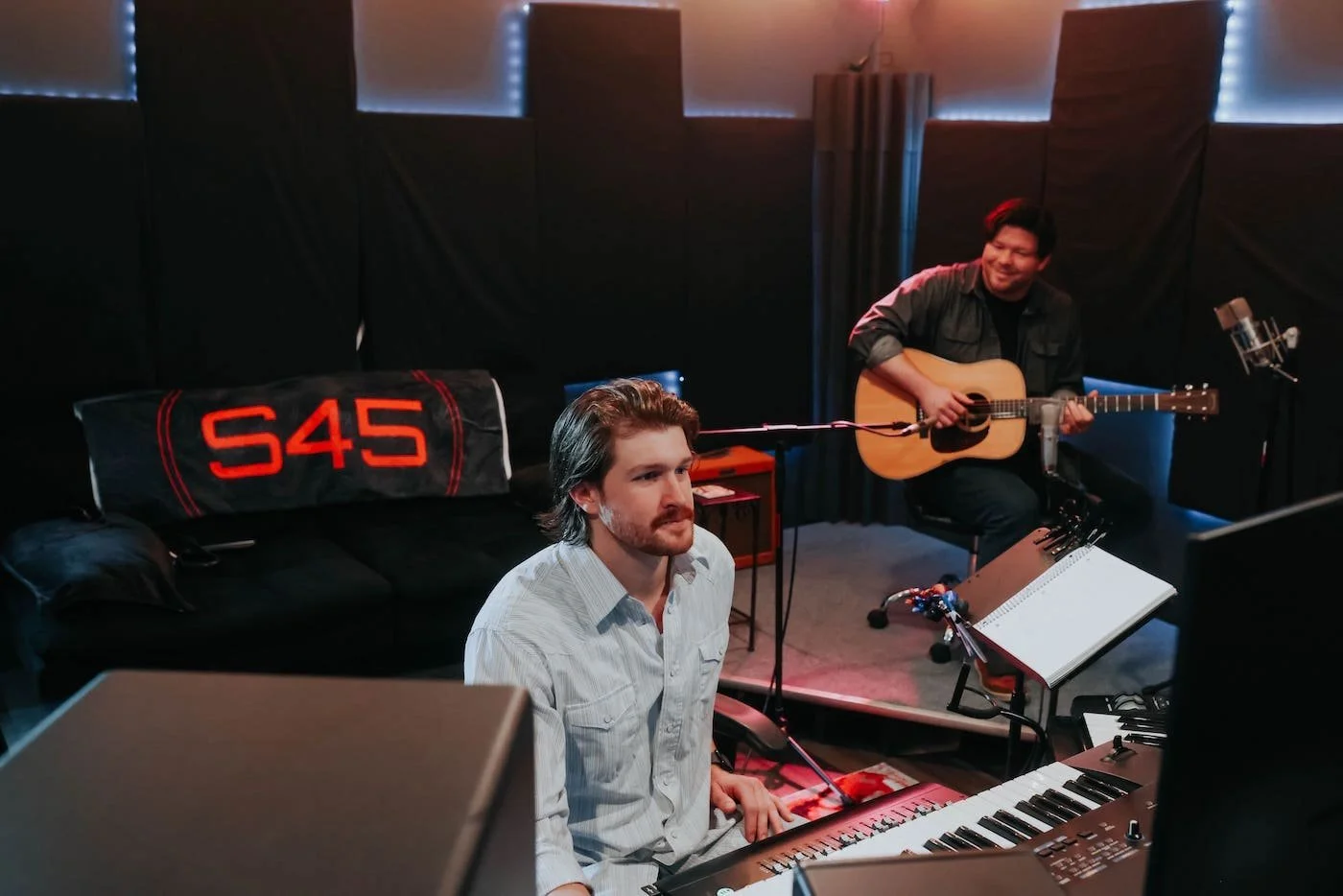
Why Connecting with Your Producer is the Key to Musical Success
Discover why building a strong connection with your producer is essential for musical success. Tips for collaboration, communication, and better recordings.
Your music is personal. It’s a reflection of your creativity, emotions, and vision. That’s why finding a producer who just “gets” you is so important. But it’s not enough to work with a skilled producer—you need one you can connect with and communicate openly. After all, a successful artist-producer relationship is built on collaboration.
How do you bridge that gap between vision and execution? It all starts with communication. Below, we’ll explore why this connection matters and how fostering open dialogue with your producer can take your music to the next level.
A Collaborative Effort, Not a Solo Mission
When you step into the studio, you’re not signing over your creative rights. You’re bringing your vision to the table, trusting your producer to enhance it while staying true to your artistic identity. The best producers don't just push buttons; they guide, suggest, harmonize with your goals, and, most importantly, listen.
For example, at Studio45b, one of our clients (let's call her Maria) came to us with a clear idea of her debut EP’s theme. During collaboration, Maria felt a certain vocal effect didn’t align with her concept. Instead of staying silent, she spoke up. Her producer not only adjusted the effect but offered a new layering technique that both of them loved in the end. The result? A track that perfectly balanced her intent with studio expertise.
This kind of back-and-forth fuels creativity and ensures the final product feels both polished and authentic. Your voice isn’t just lyrics—it’s the foundation of your unique sound.
Why Saying “I Don’t Like That” is Okay
It might feel tough to critique a producer’s idea, especially if they've been in the industry for years. But here’s the truth—a producer's job is to serve the artist's vision, not their own agenda. If something feels off, it’s your right—no, your duty—to say so.
Think of it this way: music is subjective. Producers may guide you, but they aren’t mind-readers. Open conversations pave the way for clarity and understanding on both sides. Saying, “I don’t like that,” isn’t a rejection. It’s an opportunity to brainstorm until you find something better.
At Studio45b, we’ve seen artists light up after these moments of honesty. One band, Echo Line, worked with us to create an avant-garde track. When their producer suggested a minimalist build-up, the drummer wasn’t a fan. They openly voiced their preference, leading to experimentation with multiple ideas. The final cut? A dynamic piece that showcased everybody’s strengths.
Producers worth their salt will welcome your feedback as part of the process. If you sense creative resistance, it might be time to re-evaluate the fit.
Finding a Producer Who Listens
The artist-producer relationship thrives when mutual respect stands at the center. Here’s what to look for in a producer:
Receptiveness – Do they ask questions to understand your vision?
Flexibility – Are they willing to modify ideas based on your input?
Chemistry – Do you feel at ease communicating with them?
Studio environments should feel like safe creative spaces. If you hesitate to share an idea or critique, the collaboration usually suffers. Working with someone who values your perspective fosters a more enjoyable process—and better results.
For more tips on what to look for in a producer, check out this guide on choosing the right creative partner.
Communication is a Two-Way Street
While producers should listen, artists must also stay open-minded. Sometimes, producers suggest ideas or techniques outside your comfort zone. It’s important to evaluate them with curiosity. After all, one experiment could unlock a sound you’ve never considered—and it might just be the one your project needs.
Take another Studio45b example—our client Jake. Known for his folk-inspired storytelling, he was initially hesitant to experiment with electronic sounds. But after his producer built a synth melody to complement his acoustic track, Jake realized it added depth. The result became one of his fan-favorite songs.
Balancing honesty and openness often leads to breakthroughs, even when you’re taking risks.
Wrapping it All Together
At the end of the day, collaboration grows from connection. Artists and producers who prioritize communication—whether that’s voicing feedback, bouncing ideas, or experimenting together—produce music that resonates deeply.
If you’re an artist, take these key steps today:
Reflect on what you want from a producer in terms of personality, work style, and creativity.
During initial meetings, focus on how comfortable you feel sharing your thoughts.
Once you choose a producer, set the tone for open discussions early in the process.
For further reading, explore this MusicRadar article on building a stronger artist-producer dynamic.
Finally, if you’re ready to elevate your music and work with producers who value your voice, check out our Studio45b services. We’ve helped countless artists turn their visions into reality—now it’s your turn.
Remember, music is a collaboration. Stay true to your art, but keep the door open for dialogue—and watch your sound soar.